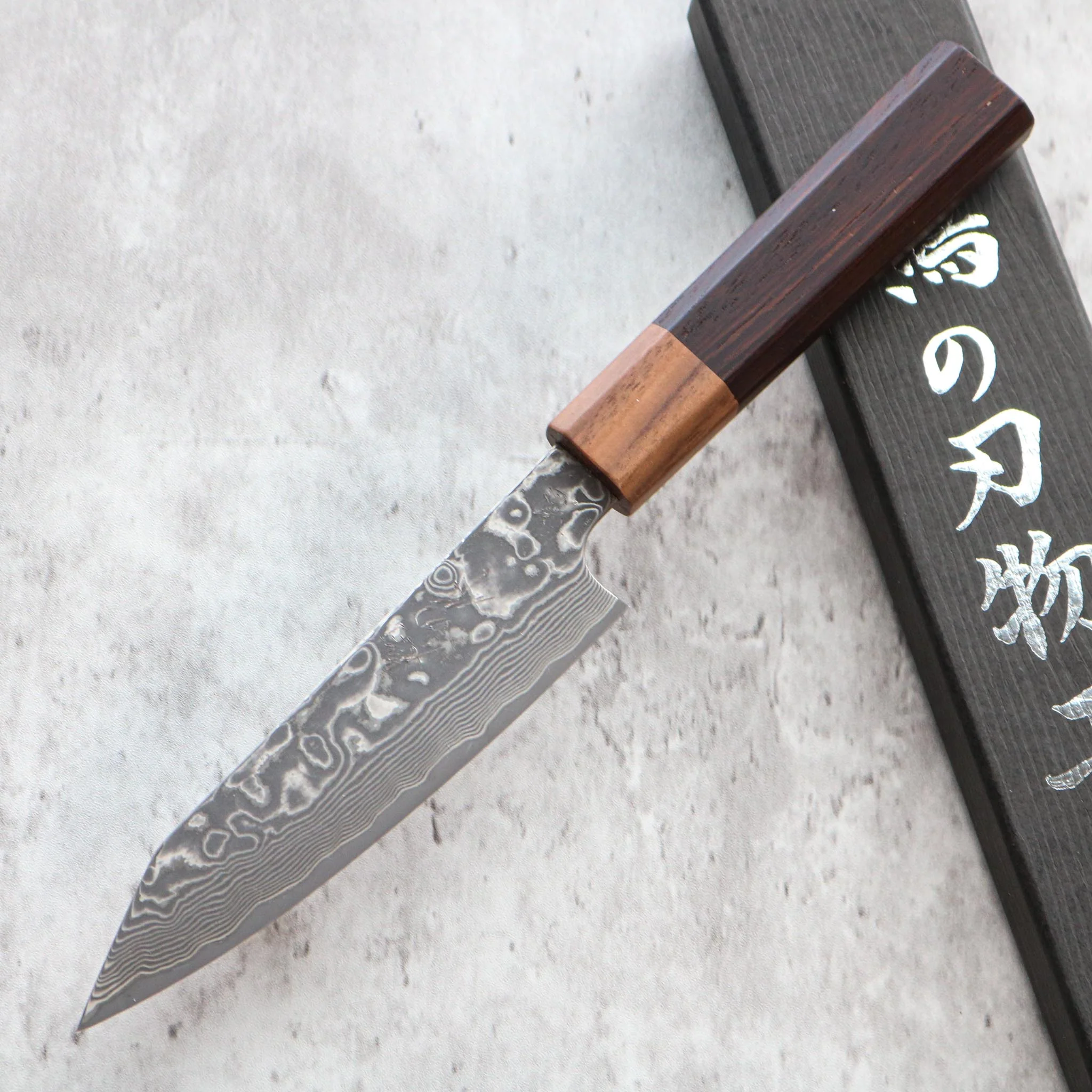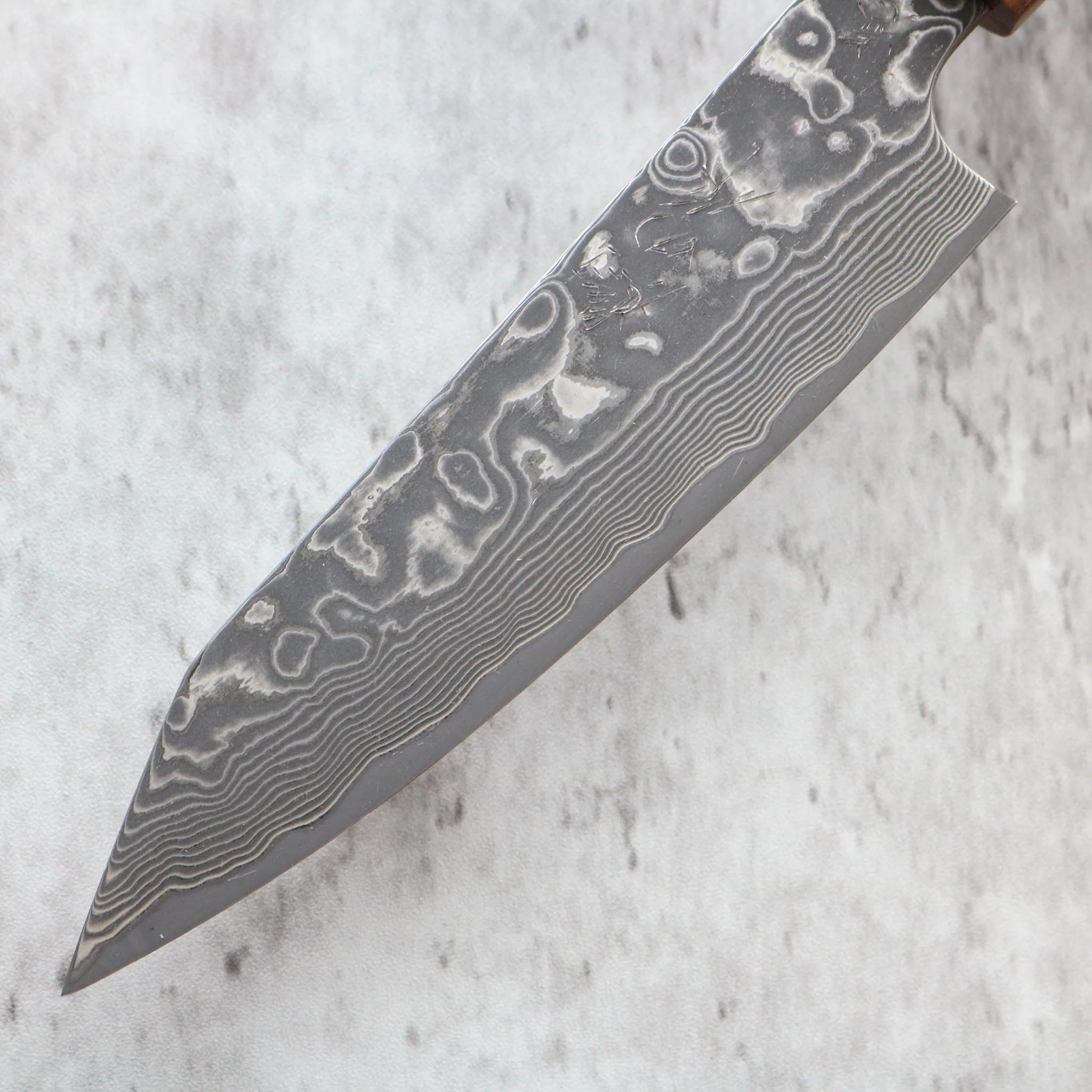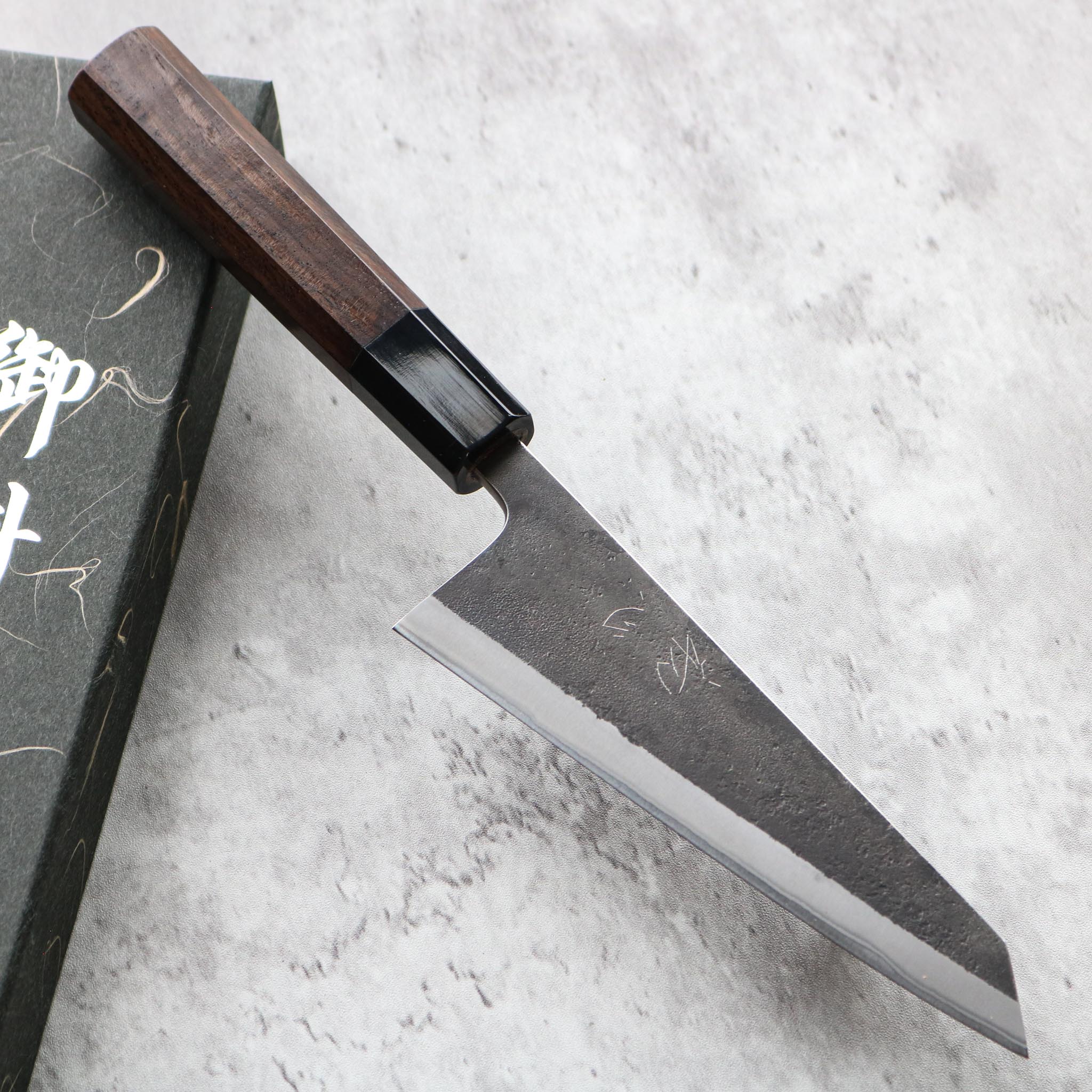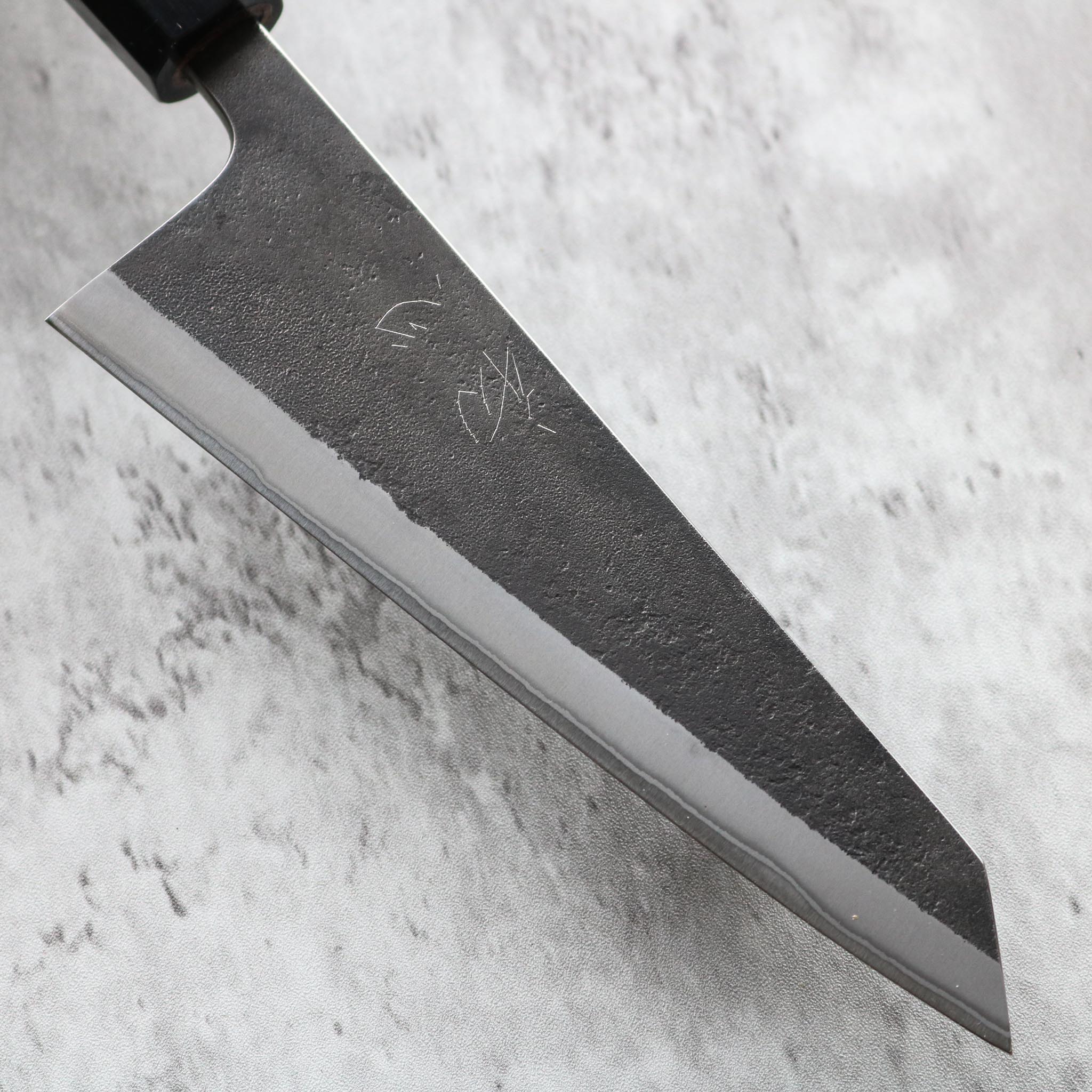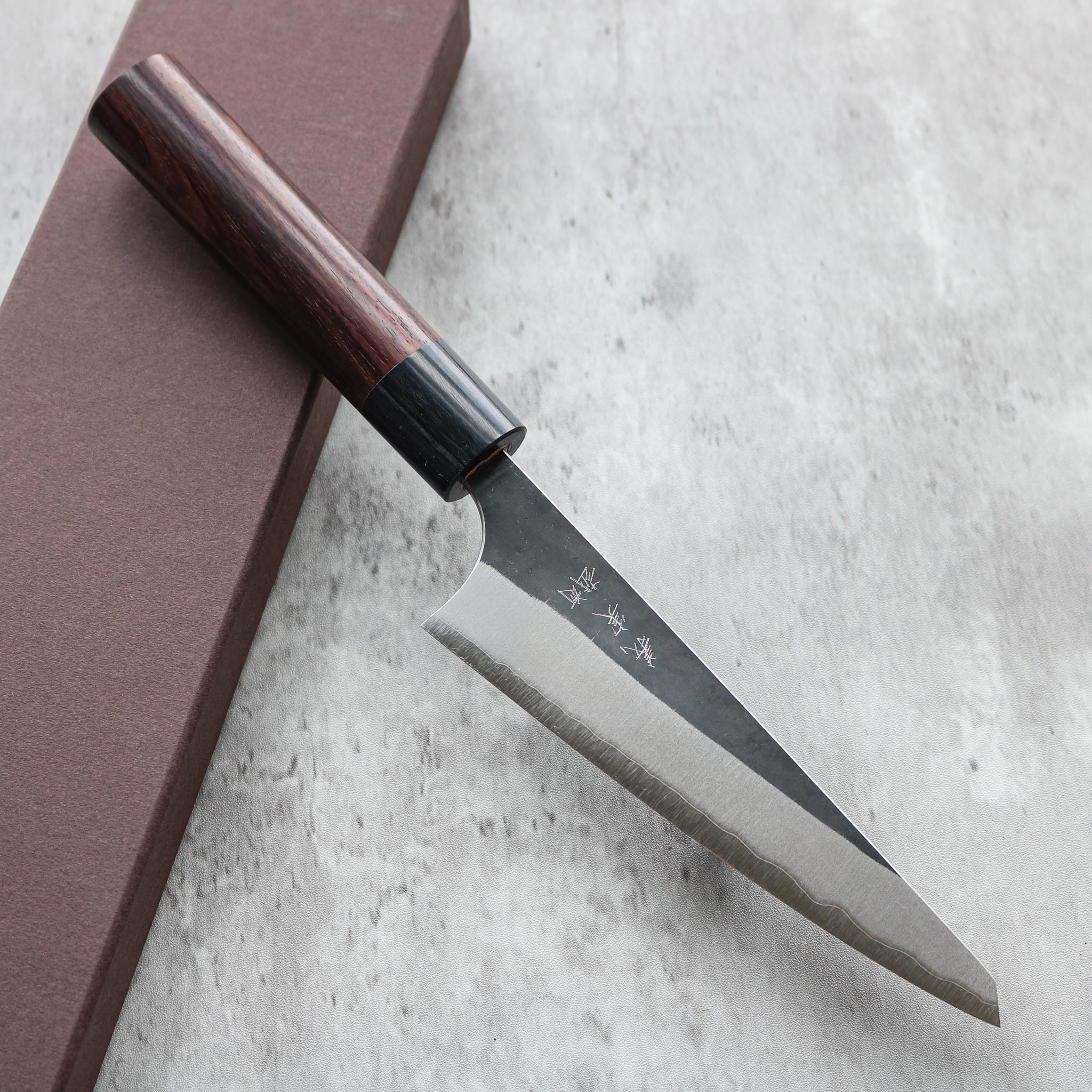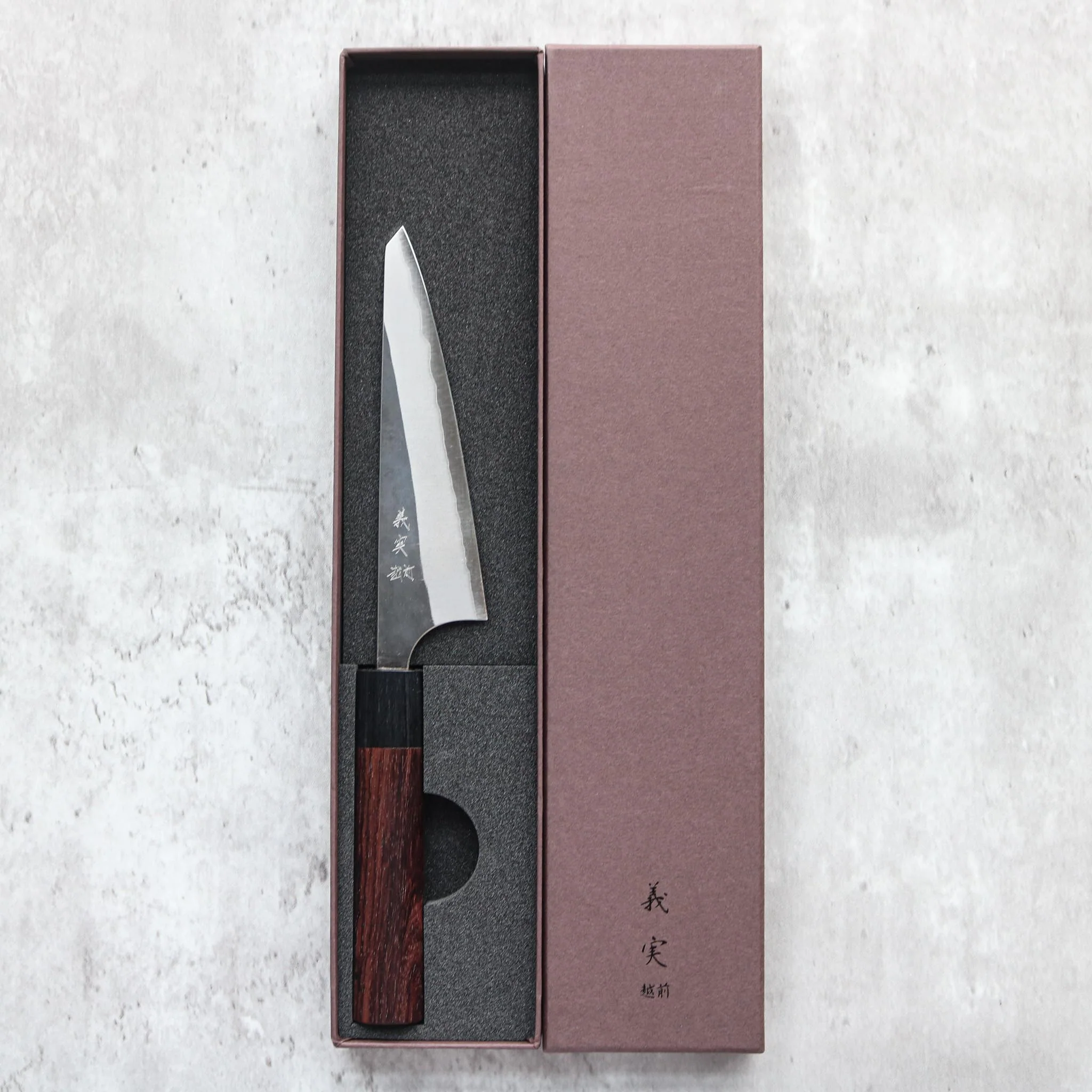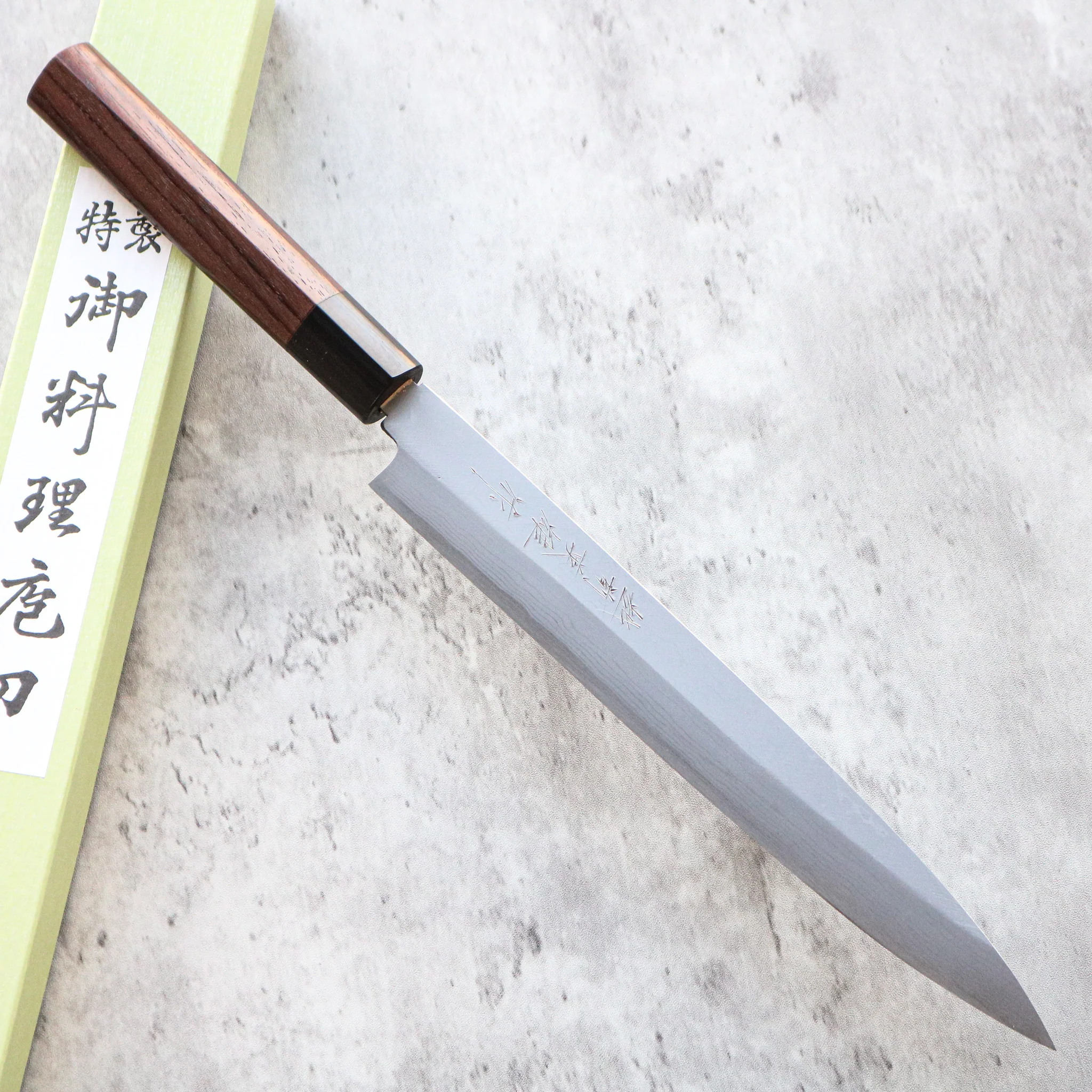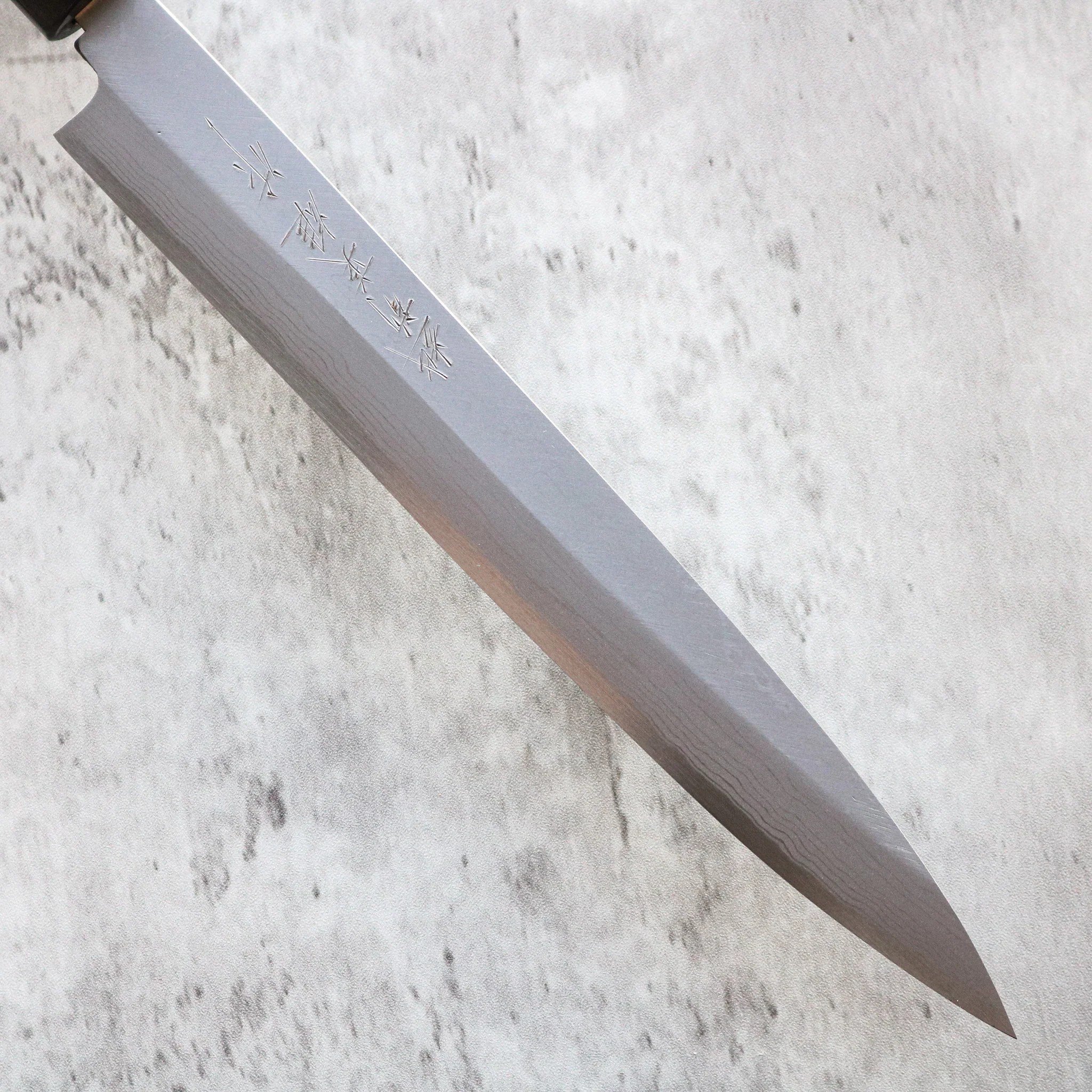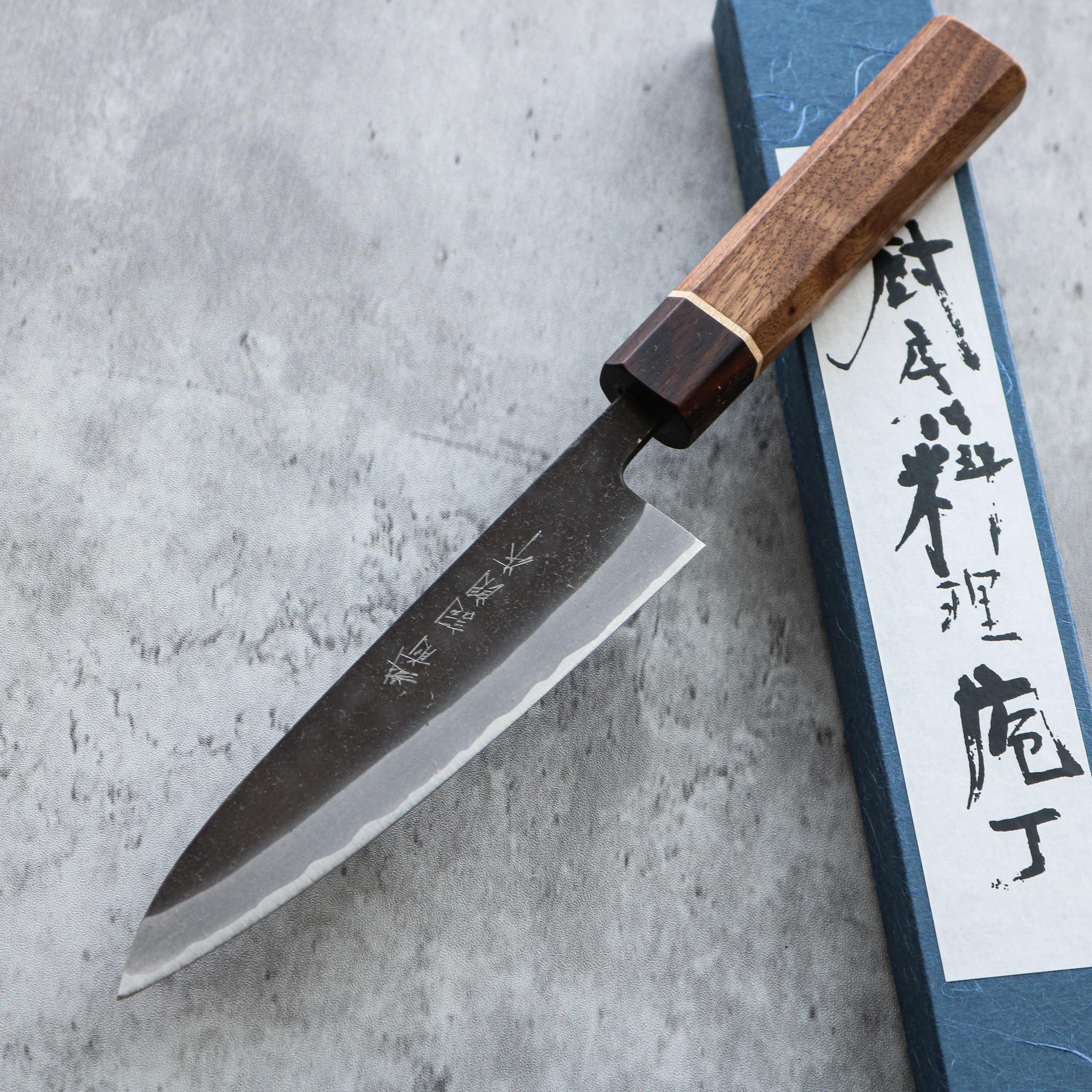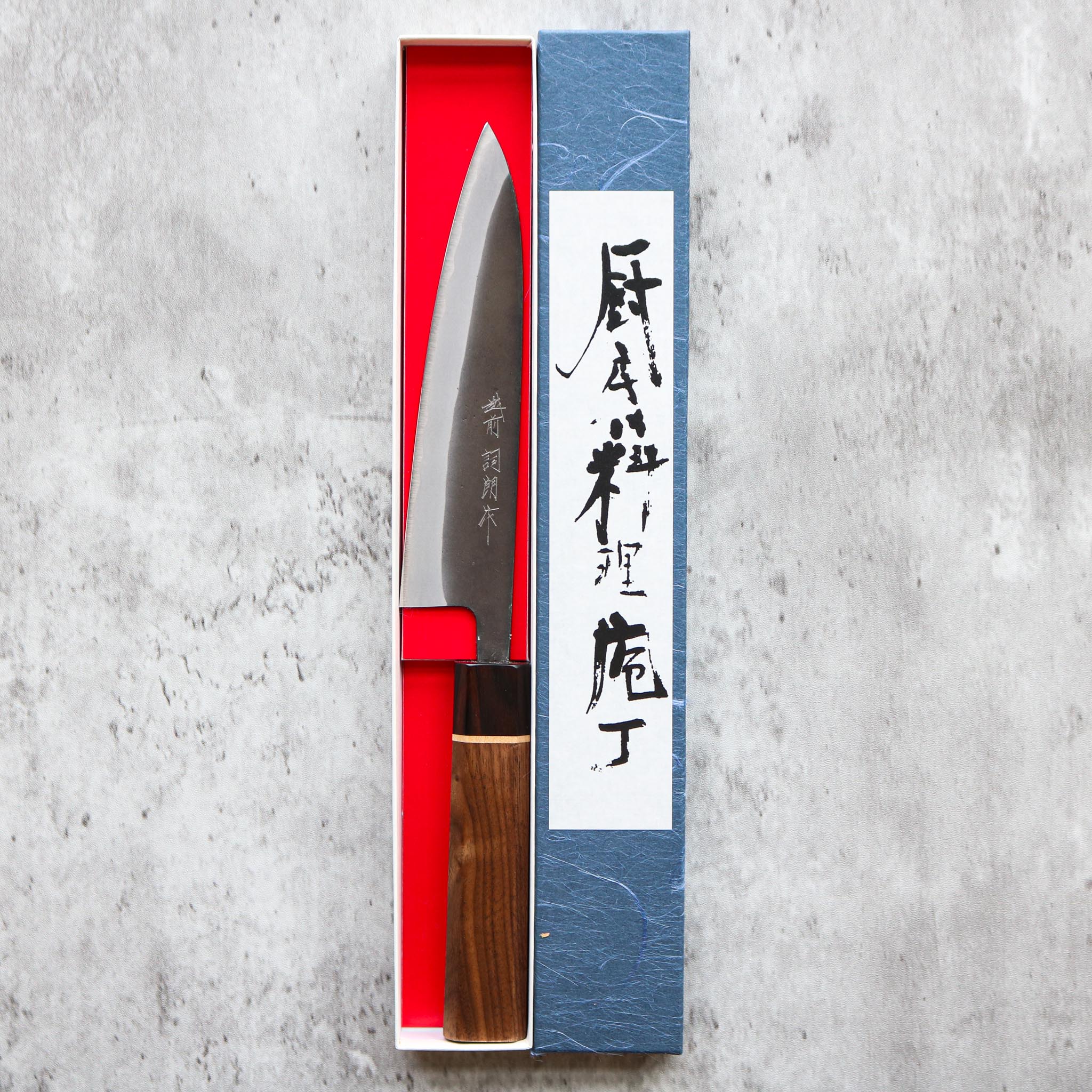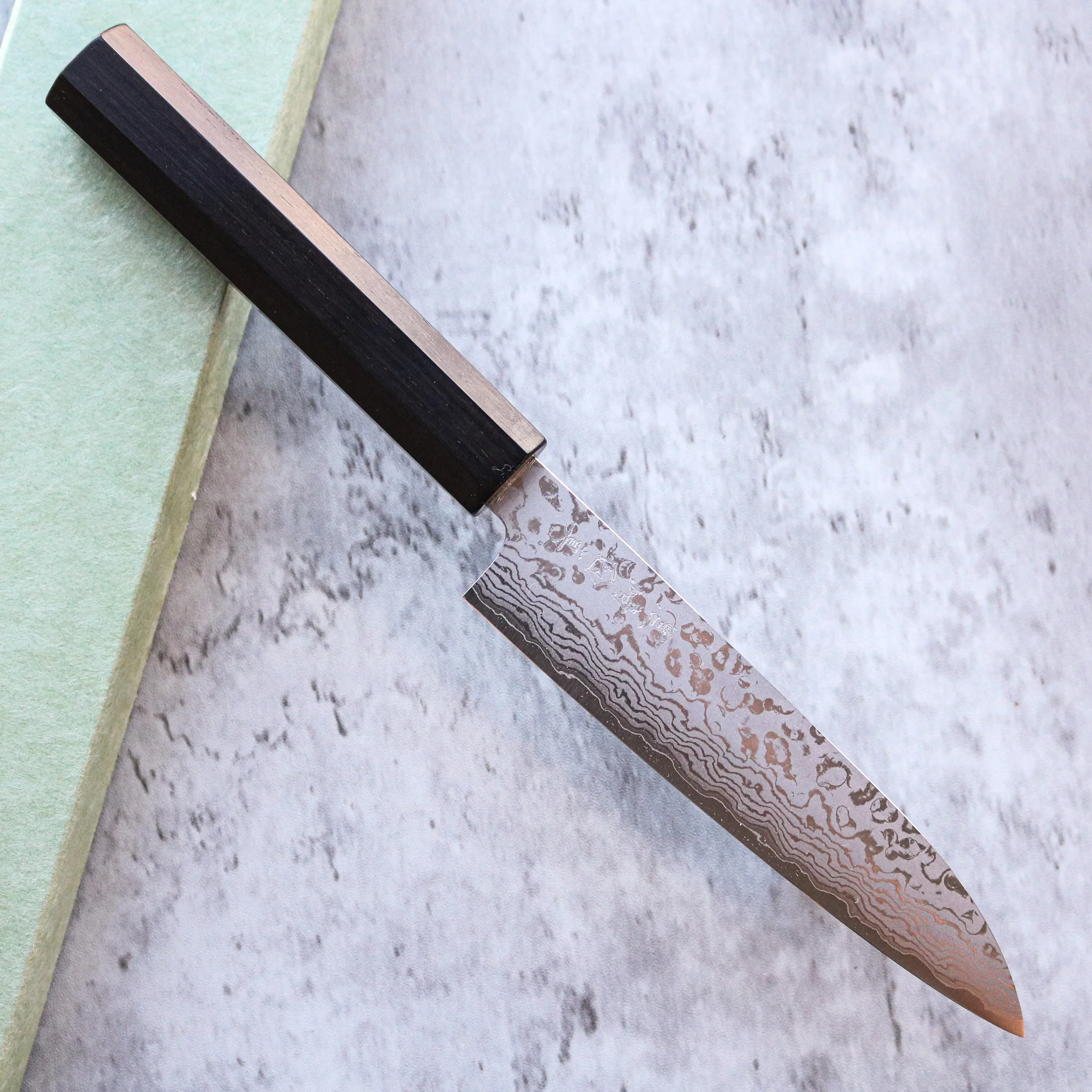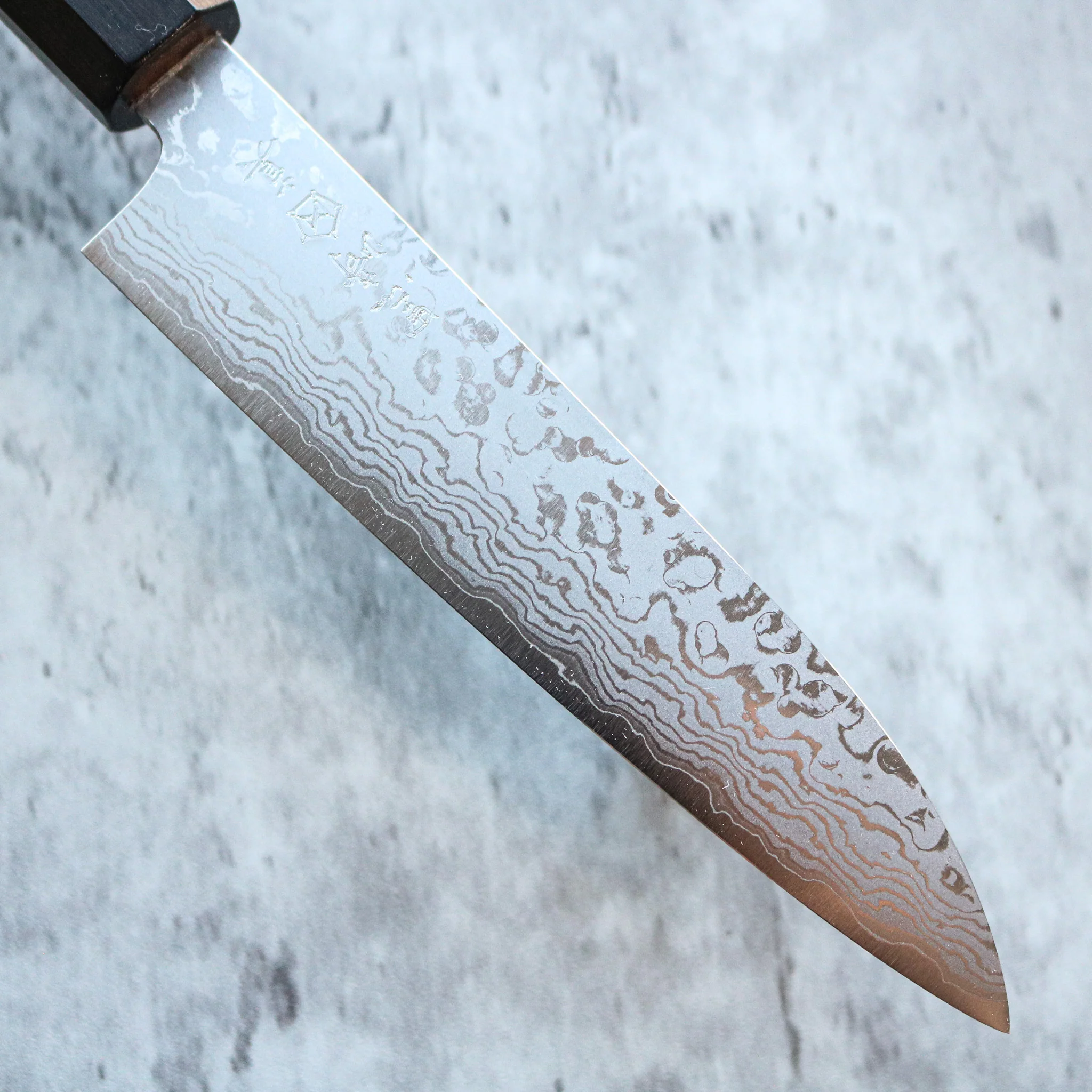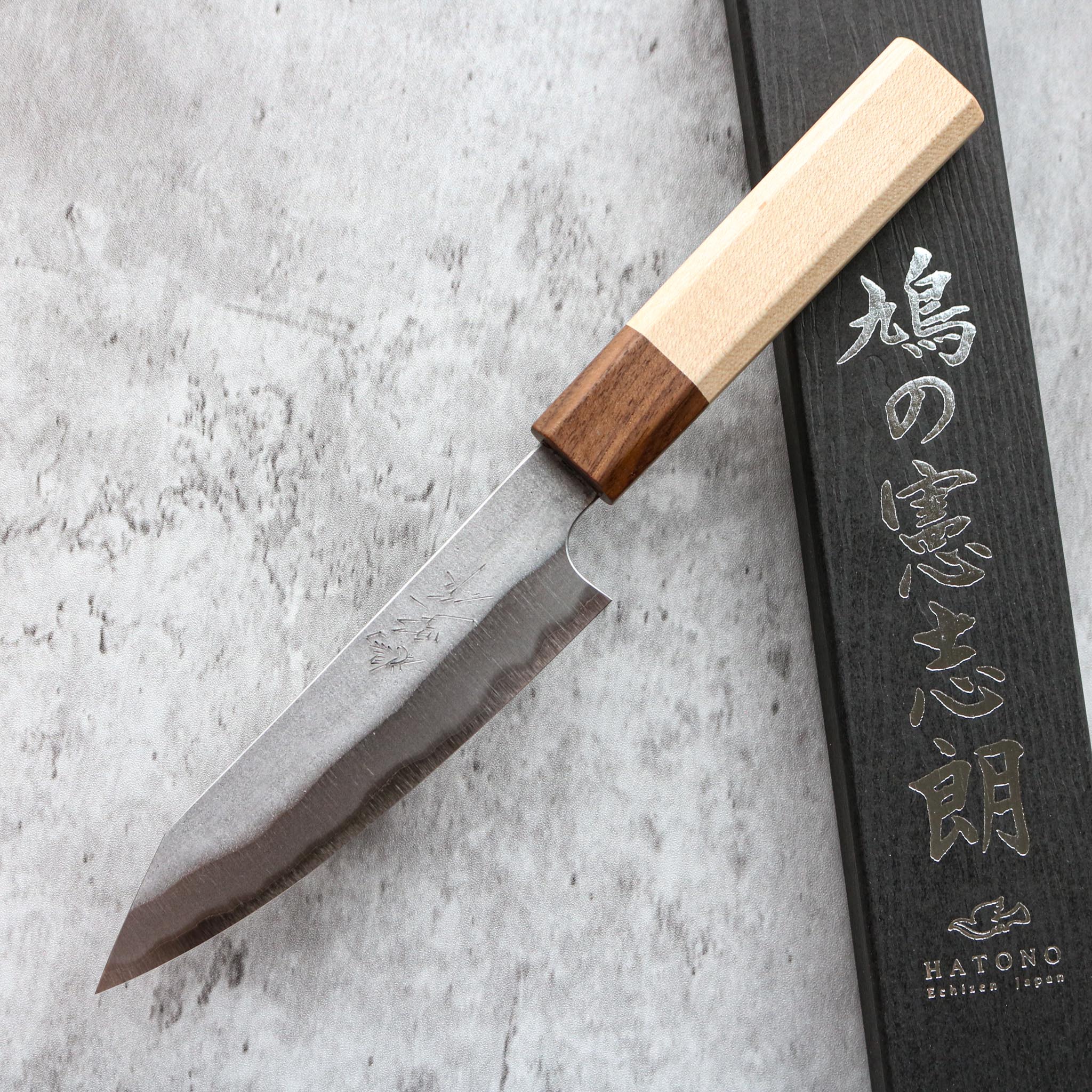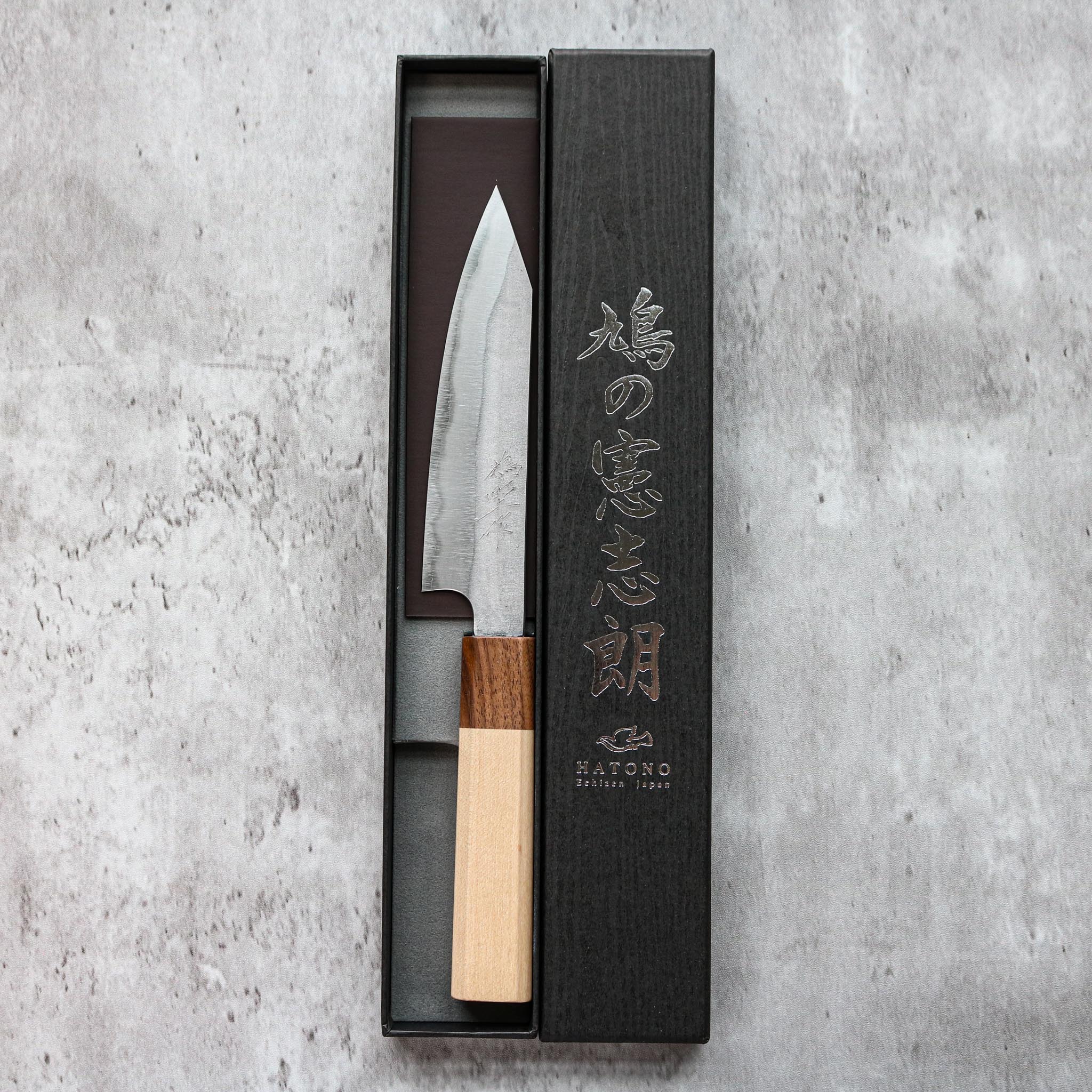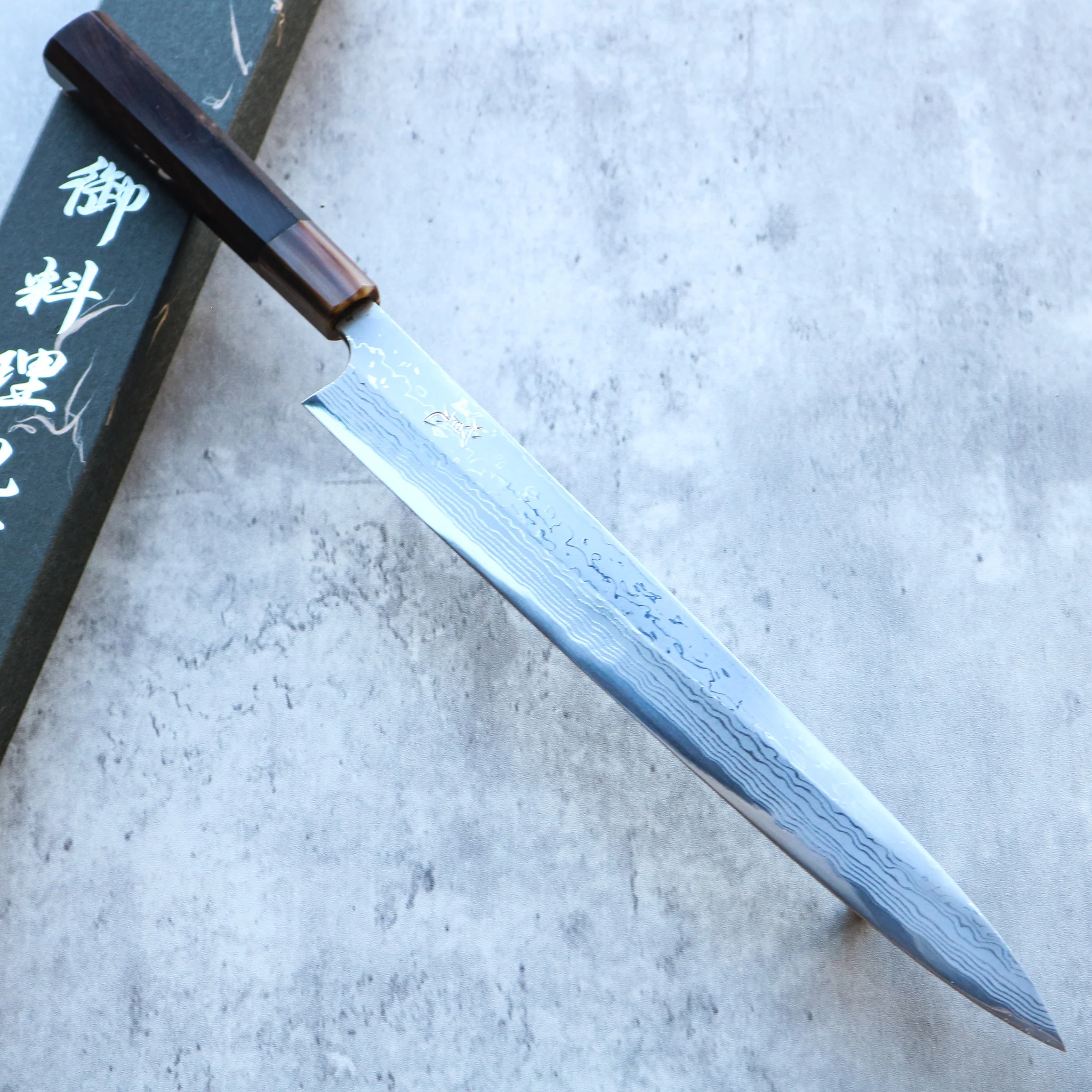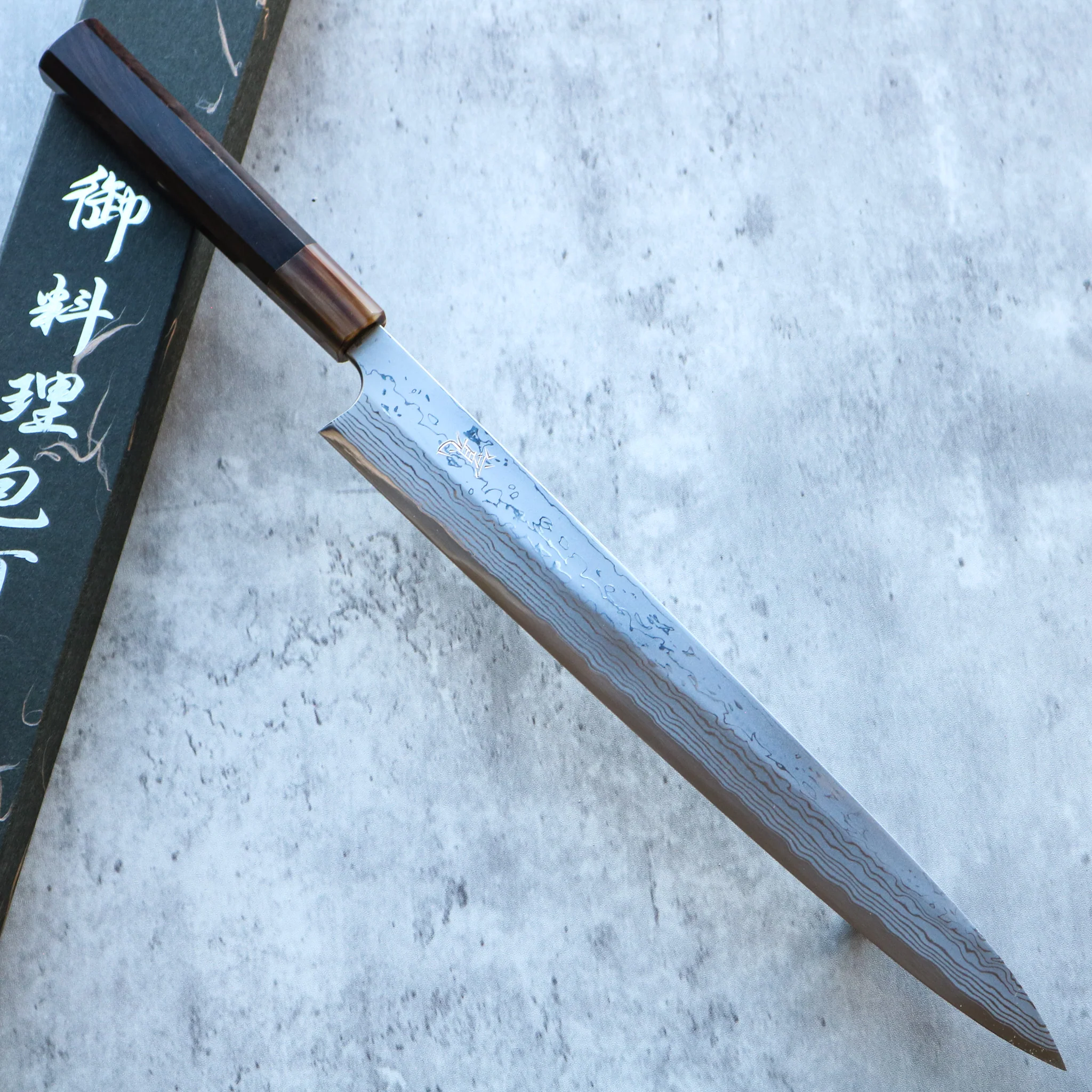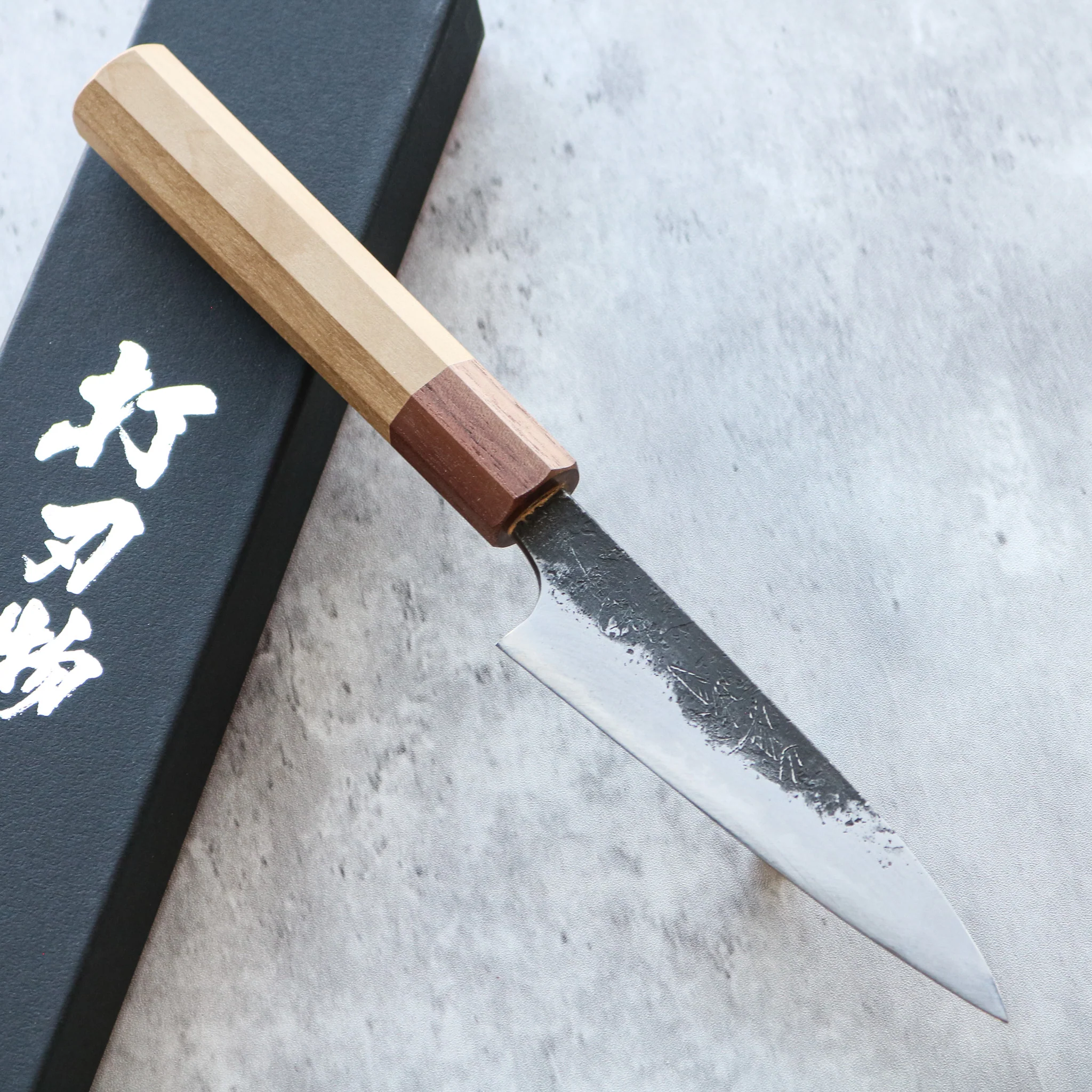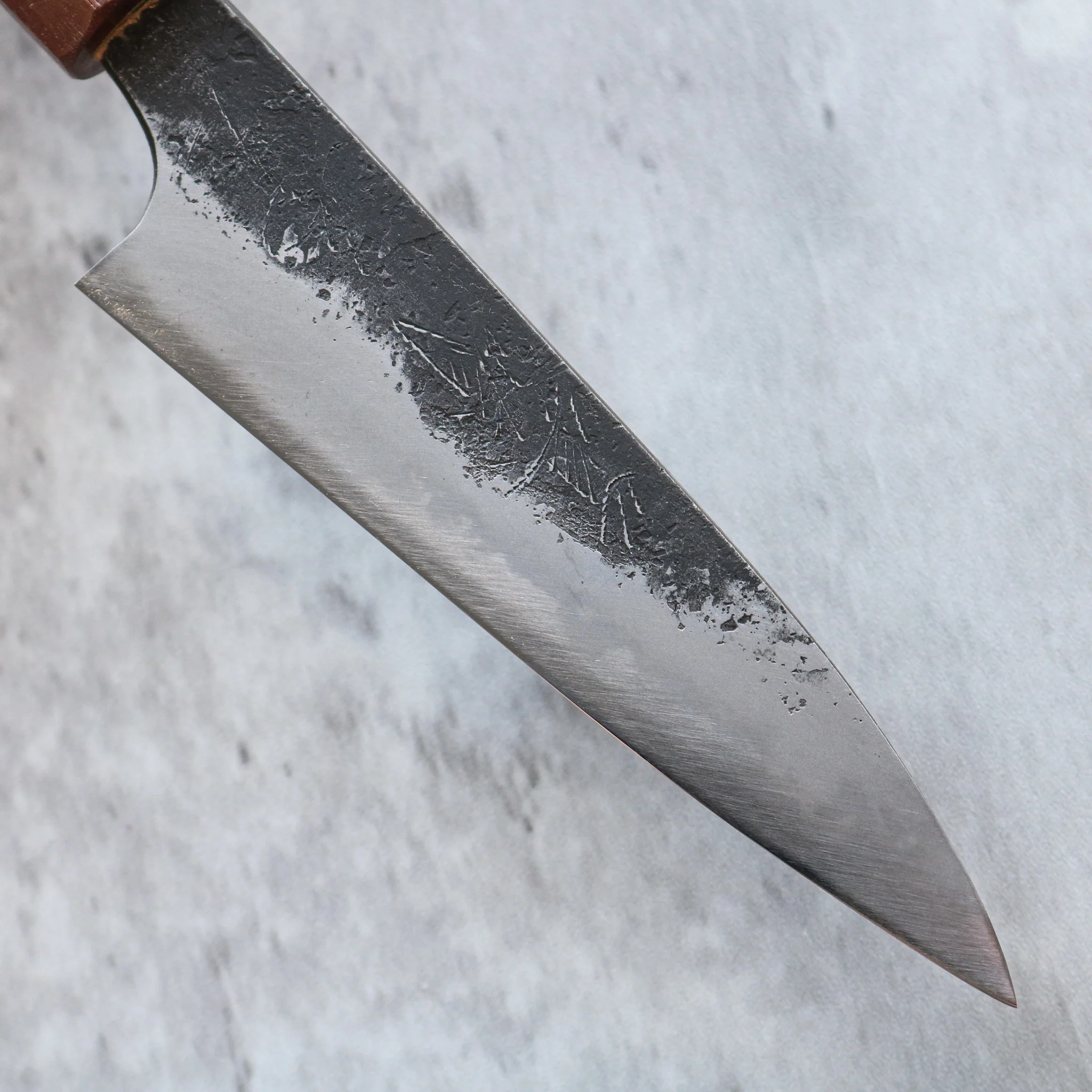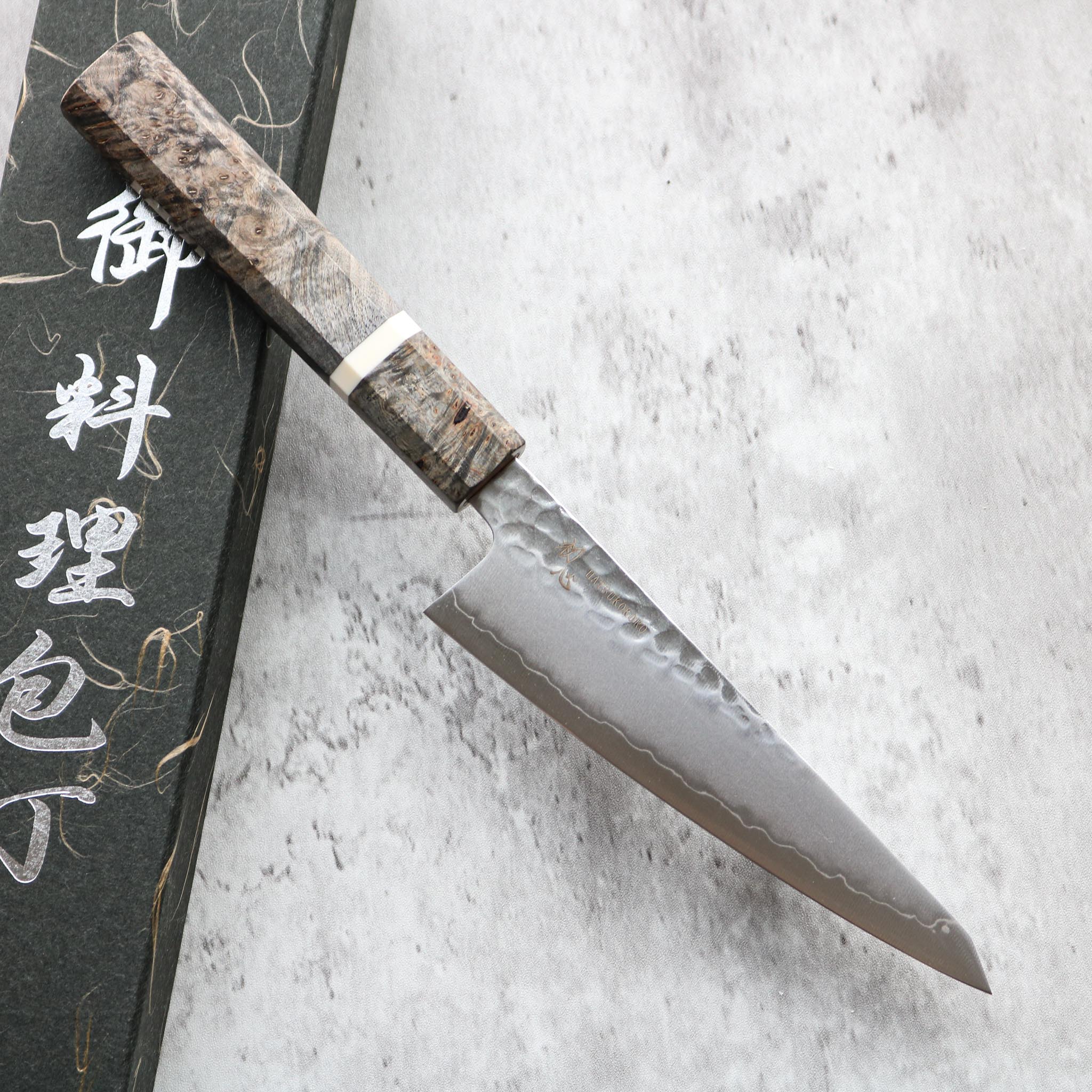
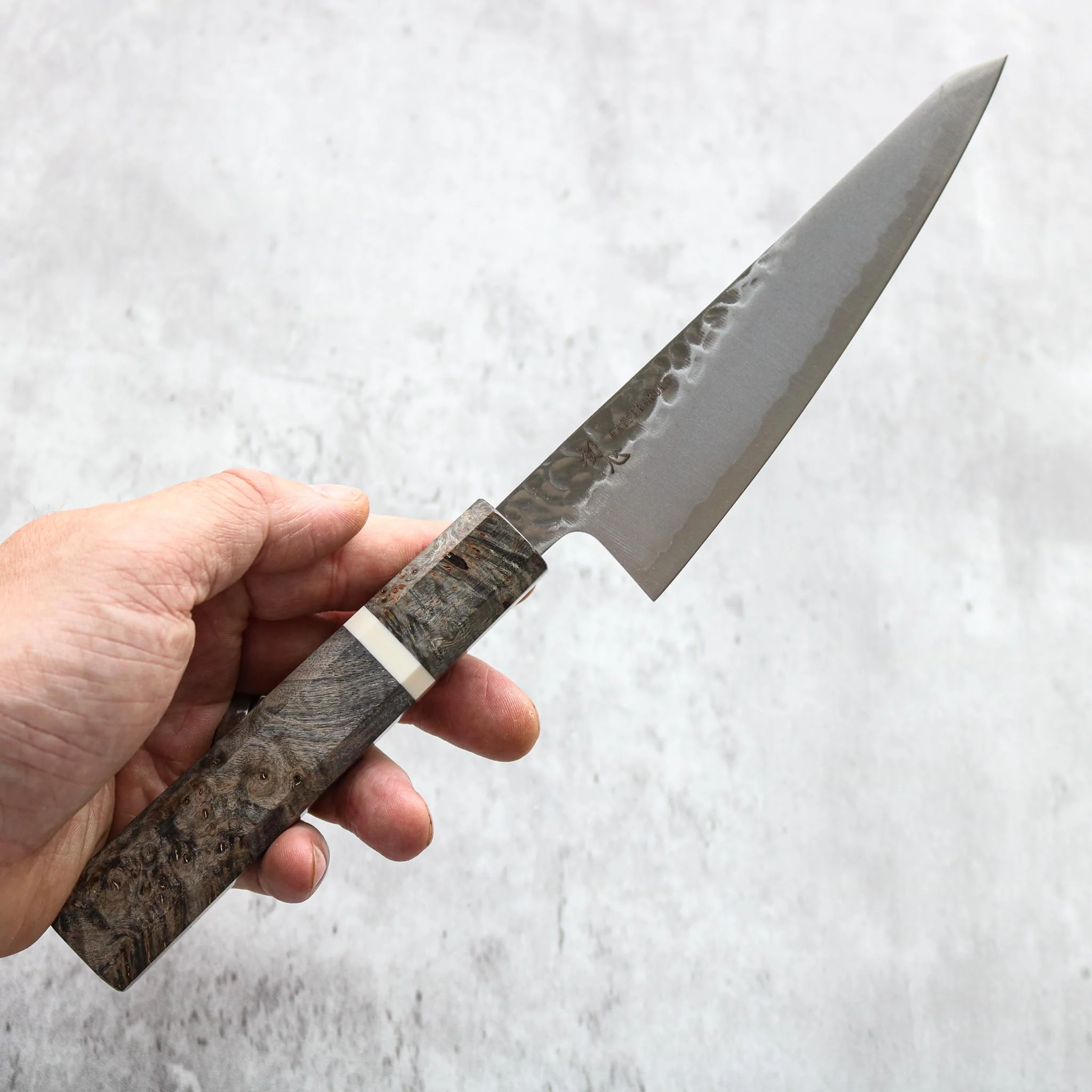
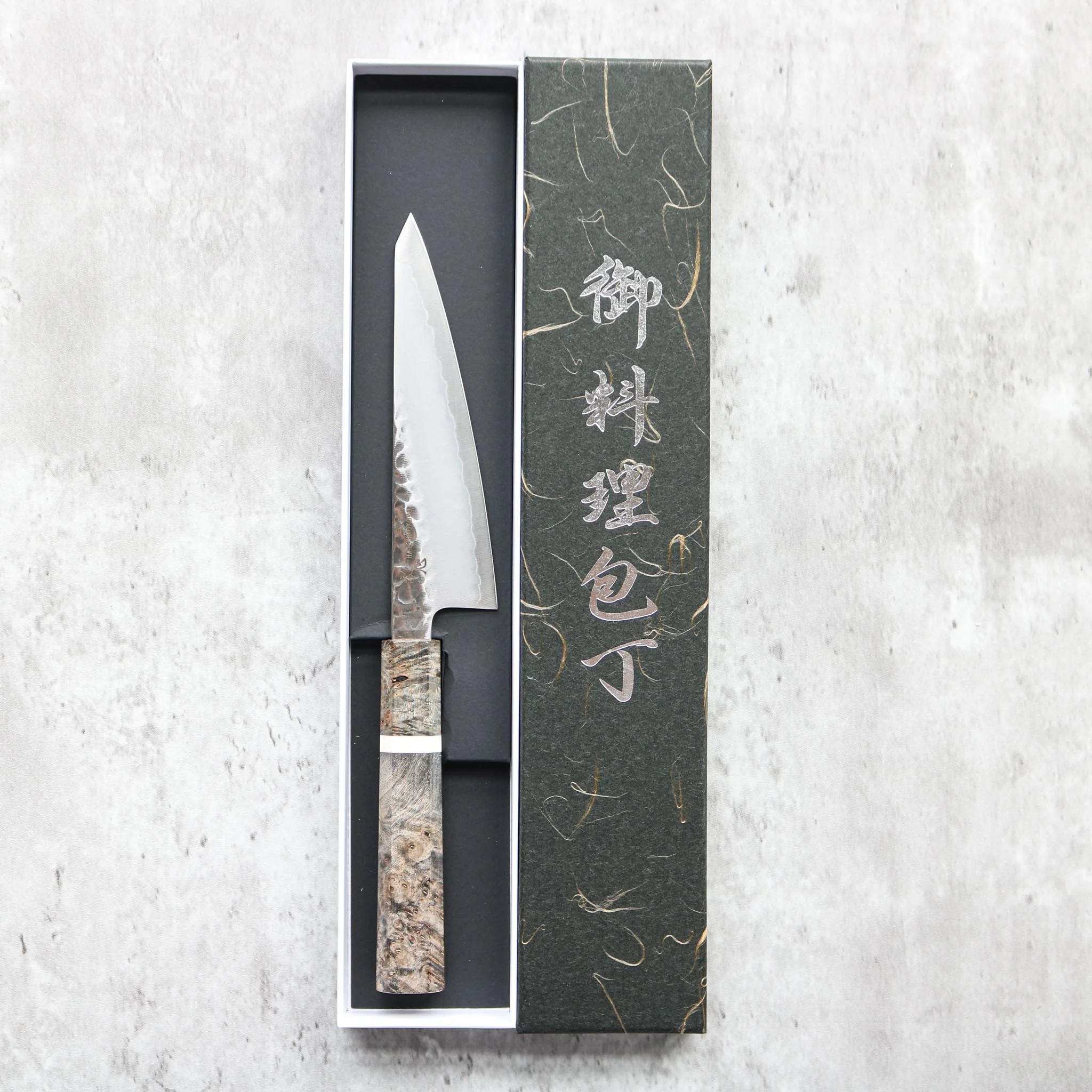
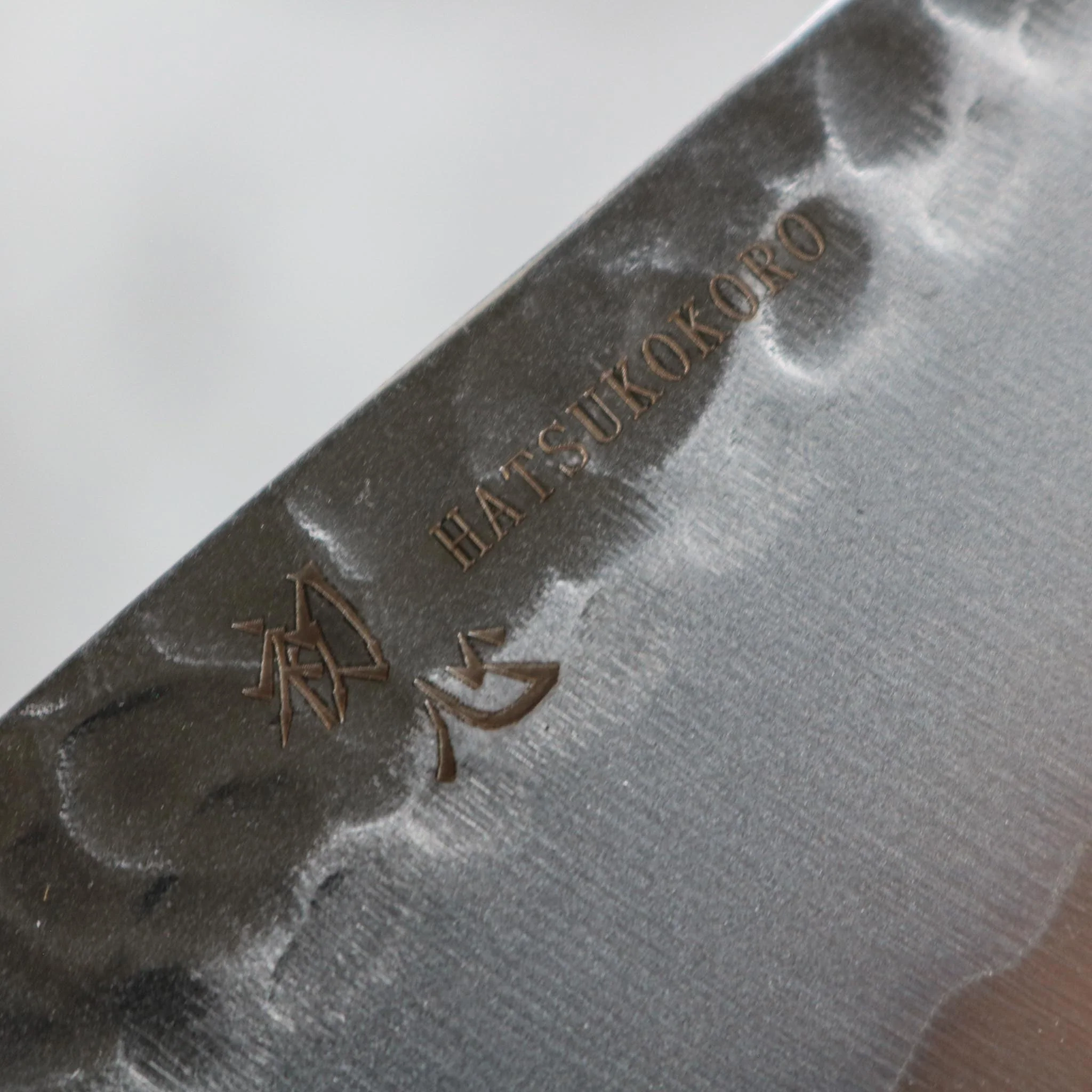
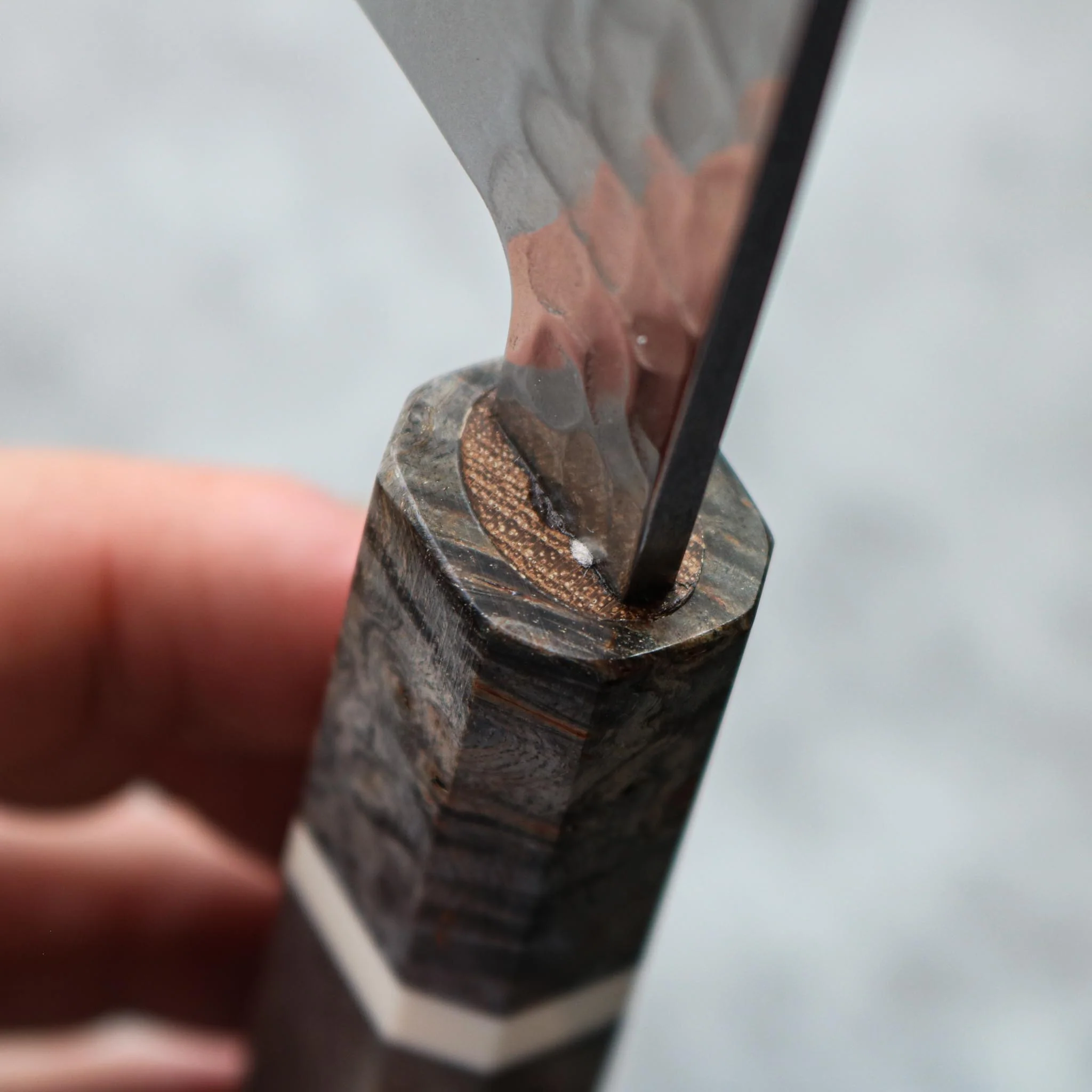
Hatsukokoro Tsuchime Ginsan Honesuki 150mm (Birchwood)
| Blade Length | 150 mm |
| Total Length | 290 mm |
| Steel | Silver #3(Ginsan) |
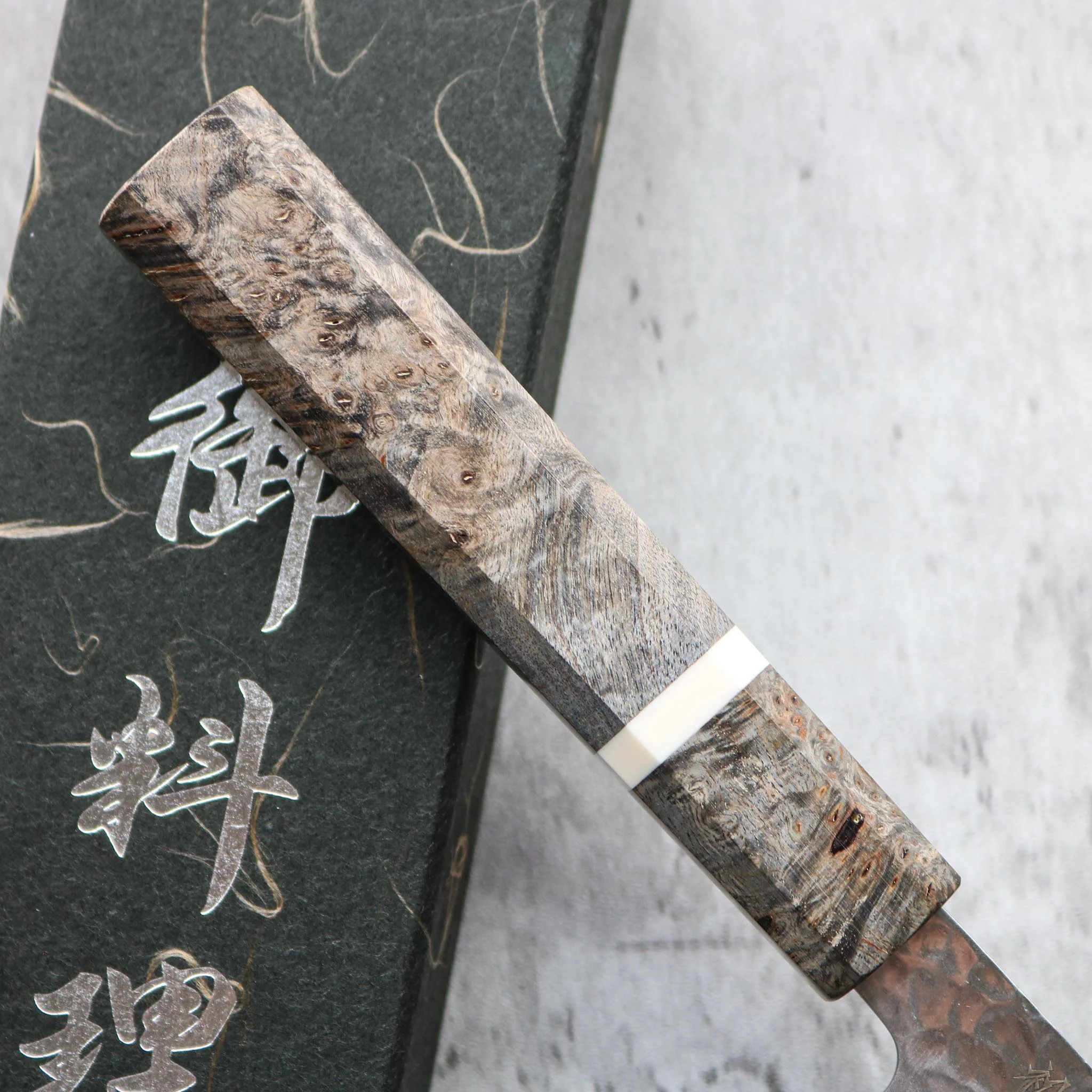
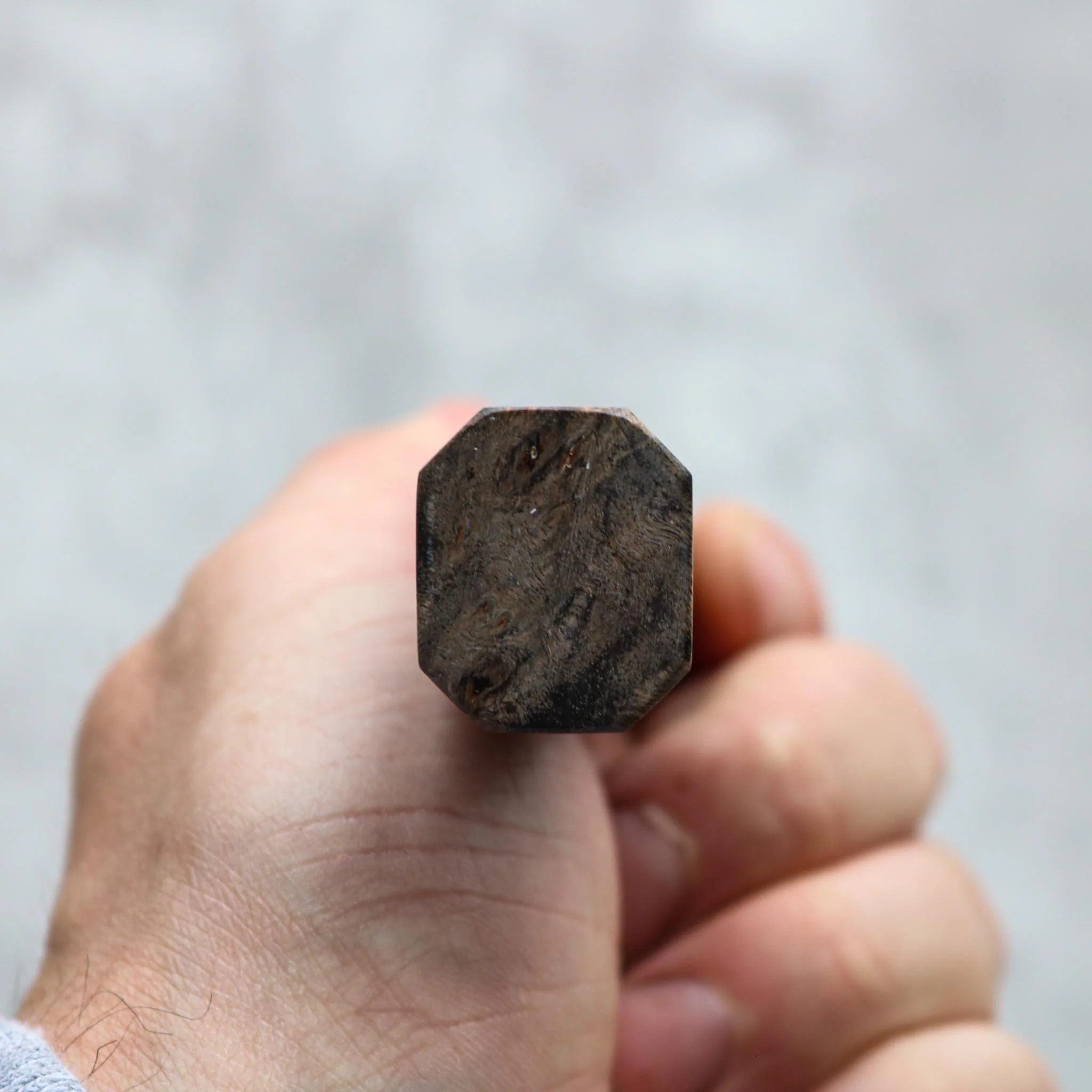
| Handle | Stabilized birchwood |
| Rockwell | 60 |
| Height Spine to heel | 38 mm |
| Width at Spine | 3.5 mm |
| Weight | 140 g |
| Bevel | Double (50/50)** |
The Blacksmith
Hatsukokoro brings in masters of smithing, sharpening, and handle making to ensure quality, and a high attention to detail on their knives, so you know that you will be getting an amazing work knife. Based out of the industrial city of Amagasaki , Hyogo Prefecture, Japan, Hatsukokoro offers a wide breadth of handcrafted blades, sourcing from a variety of knife making regions across Japan. Their offerings are diverse in price point and profile, making them a great option for both industry guys and home cooks.
The Knife
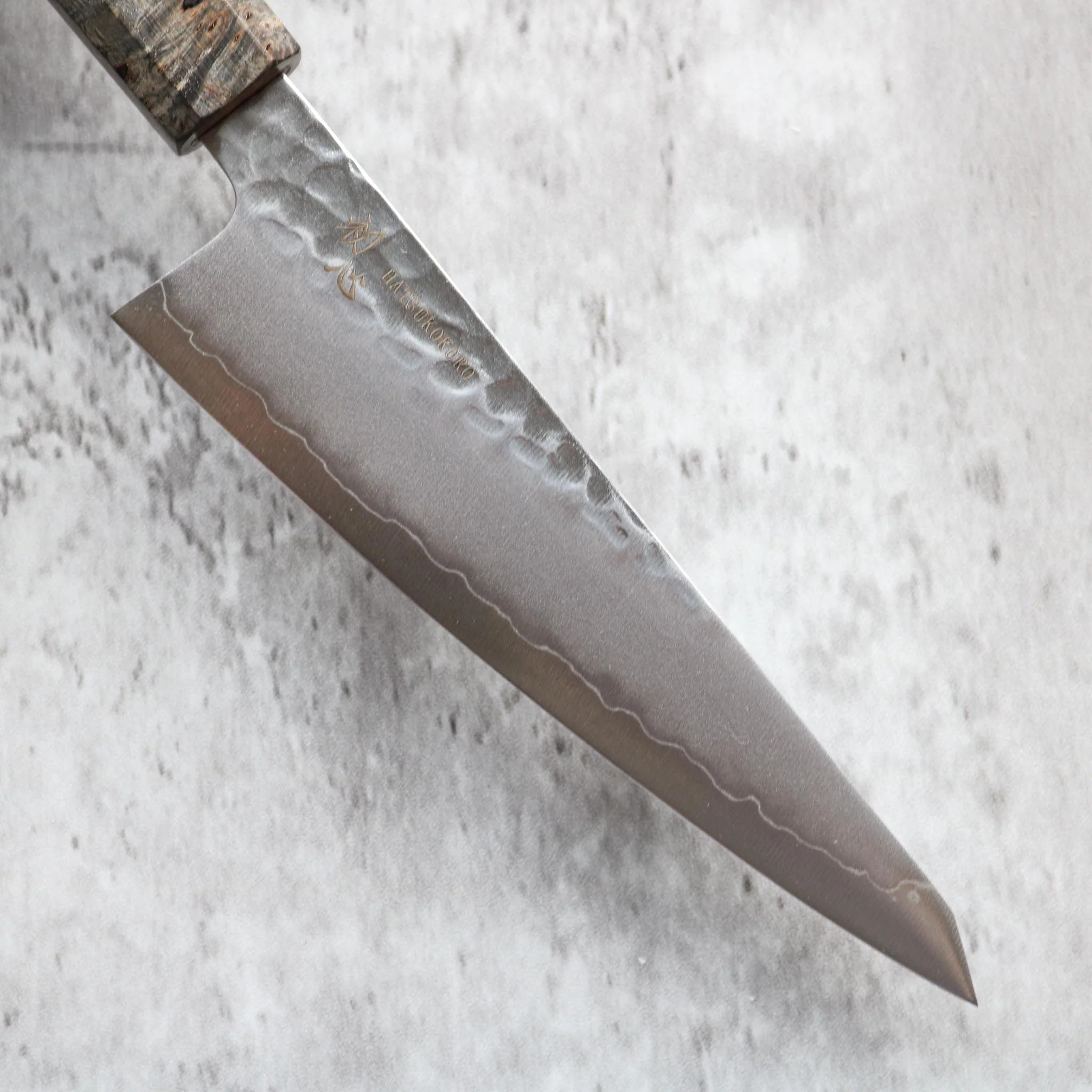
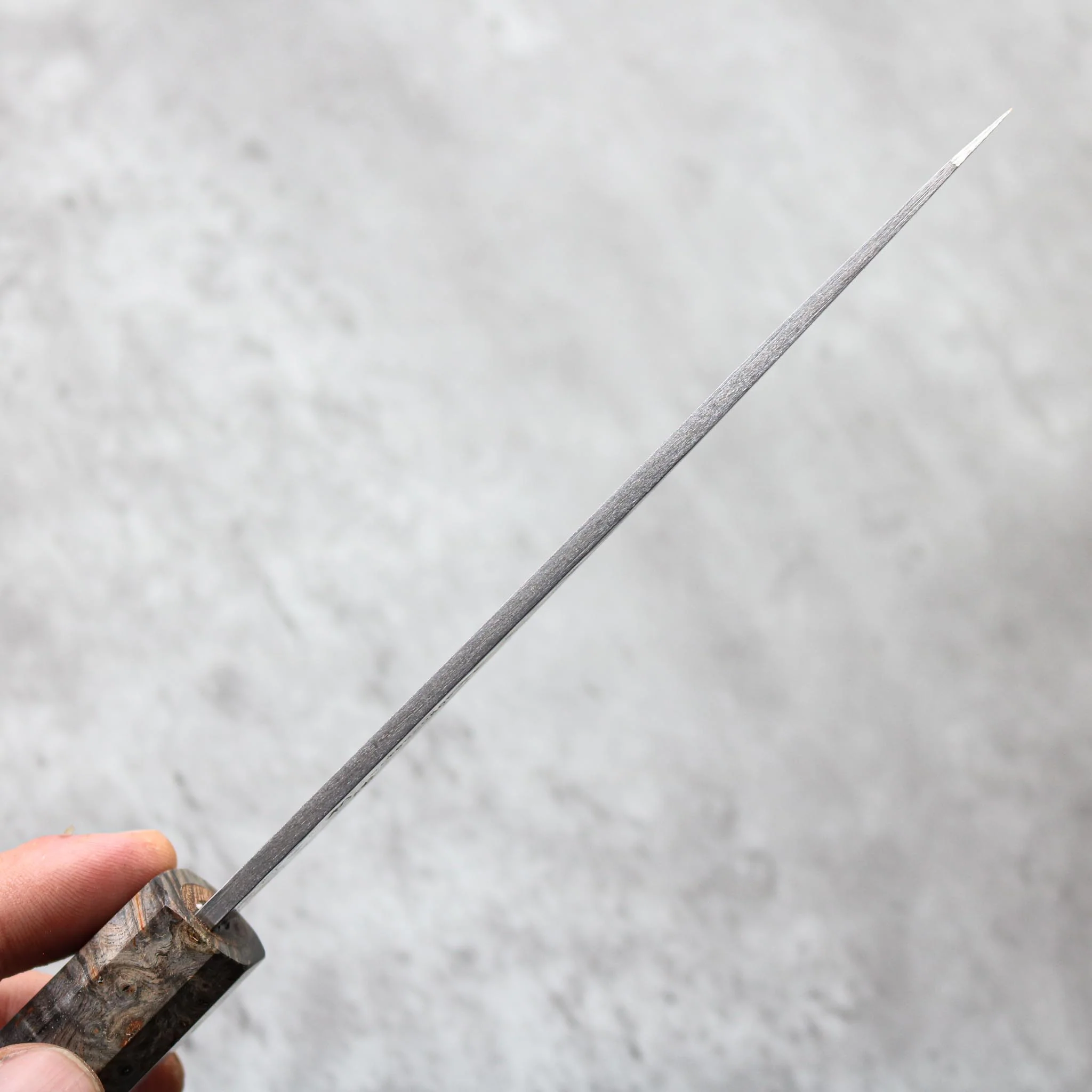
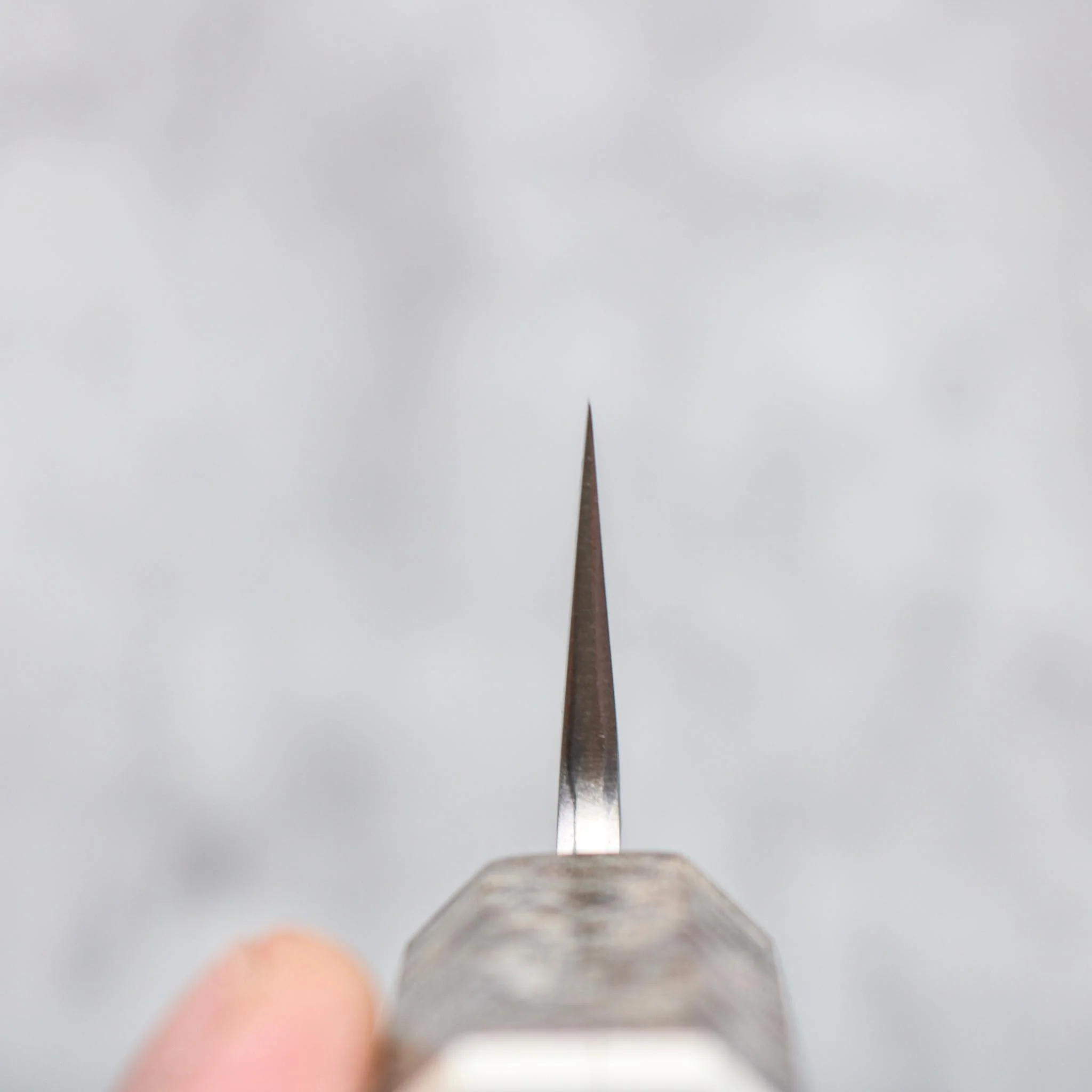
The Honesuki is a Japanese butchery knife originally designed for breaking down chicken. The reverse tanto tip, or K-tip, gives this knife great precision and allows the user to get in between joints and around bones with ease. The thick spine gives the knife a robust feel and though it is thin behind the edge, it's not as thin as other Japanese knives making it slightly less prone to chipping. This knife is not meant to go through bones and will likely chip if used to try to cut bones.
- Although this knife is made from stainless steel we do still encourage our customers to keep their knives as dry and clean as possible.
- NO DISHWASHER - the high heat will ruin the wooden handle.
- Wash and dry by hand using regular dish soap and warm water using a none abrasive sponge or cloth.
- Ensure the knife is dry before being put away for storage and ensure the edge of the knife is protected to avoid any unnecessary dulling.
- Avoid Bones, Frozen foods, nuts and hard candies or anything other than fruits, vegetables and proteins.
- Simply Wipe the knife with a damp cloth immediately after use to keep it from rusting or discouloring.
- Never put your knife in the Dishwasher. The extreme heat will ruin the wooden handle.
- Highly acidic ingredients (Onions, Tomatoes, Citrus) Will cause rust and oxidation to happen faster, thus the user must ensure the knife is wiped clean immediately after working with such an ingredient.
- Should any rust form it can be removed using a rust eraser or a mixture of Baking soda and water to simply scrub it clean.
Original: $184.35
-70%$184.35
$55.30Product Information
Product Information
Shipping & Returns
Shipping & Returns
Description
| Blade Length | 150 mm |
| Total Length | 290 mm |
| Steel | Silver #3(Ginsan) |
| Handle | Stabilized birchwood |
| Rockwell | 60 |
| Height Spine to heel | 38 mm |
| Width at Spine | 3.5 mm |
| Weight | 140 g |
| Bevel | Double (50/50)** |
The Blacksmith
Hatsukokoro brings in masters of smithing, sharpening, and handle making to ensure quality, and a high attention to detail on their knives, so you know that you will be getting an amazing work knife. Based out of the industrial city of Amagasaki , Hyogo Prefecture, Japan, Hatsukokoro offers a wide breadth of handcrafted blades, sourcing from a variety of knife making regions across Japan. Their offerings are diverse in price point and profile, making them a great option for both industry guys and home cooks.
The Knife
The Honesuki is a Japanese butchery knife originally designed for breaking down chicken. The reverse tanto tip, or K-tip, gives this knife great precision and allows the user to get in between joints and around bones with ease. The thick spine gives the knife a robust feel and though it is thin behind the edge, it's not as thin as other Japanese knives making it slightly less prone to chipping. This knife is not meant to go through bones and will likely chip if used to try to cut bones.
- Although this knife is made from stainless steel we do still encourage our customers to keep their knives as dry and clean as possible.
- NO DISHWASHER - the high heat will ruin the wooden handle.
- Wash and dry by hand using regular dish soap and warm water using a none abrasive sponge or cloth.
- Ensure the knife is dry before being put away for storage and ensure the edge of the knife is protected to avoid any unnecessary dulling.
- Avoid Bones, Frozen foods, nuts and hard candies or anything other than fruits, vegetables and proteins.
- Simply Wipe the knife with a damp cloth immediately after use to keep it from rusting or discouloring.
- Never put your knife in the Dishwasher. The extreme heat will ruin the wooden handle.
- Highly acidic ingredients (Onions, Tomatoes, Citrus) Will cause rust and oxidation to happen faster, thus the user must ensure the knife is wiped clean immediately after working with such an ingredient.
- Should any rust form it can be removed using a rust eraser or a mixture of Baking soda and water to simply scrub it clean.