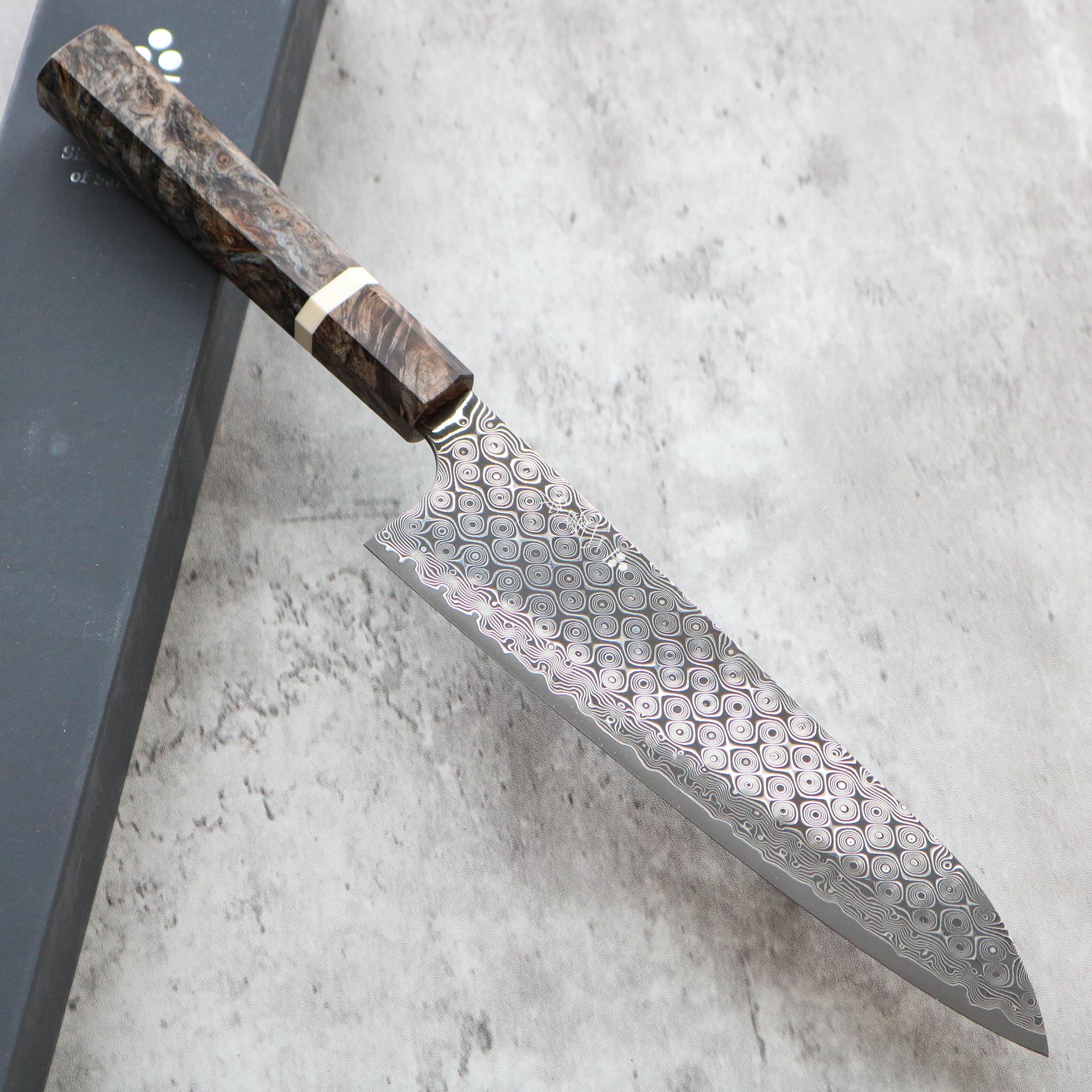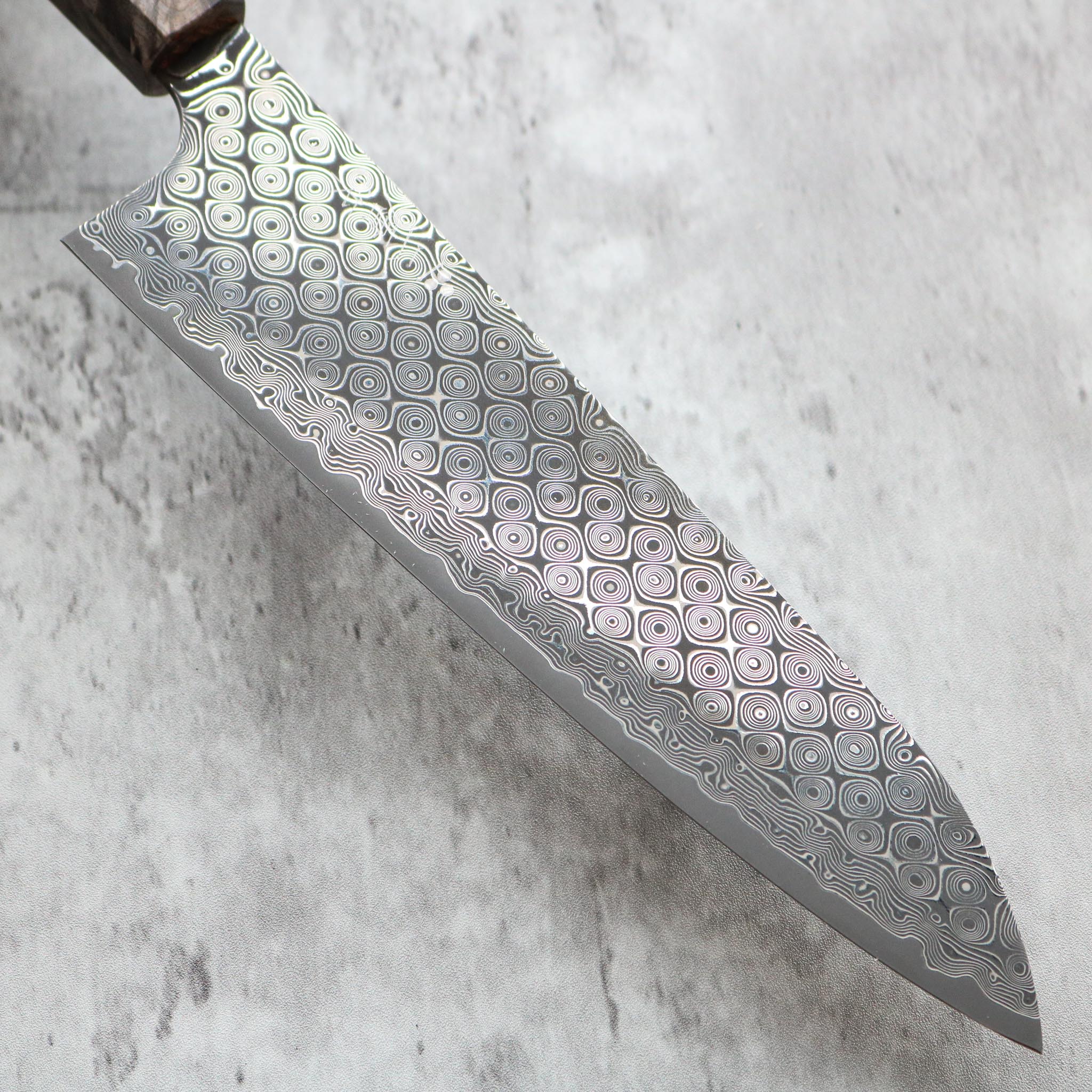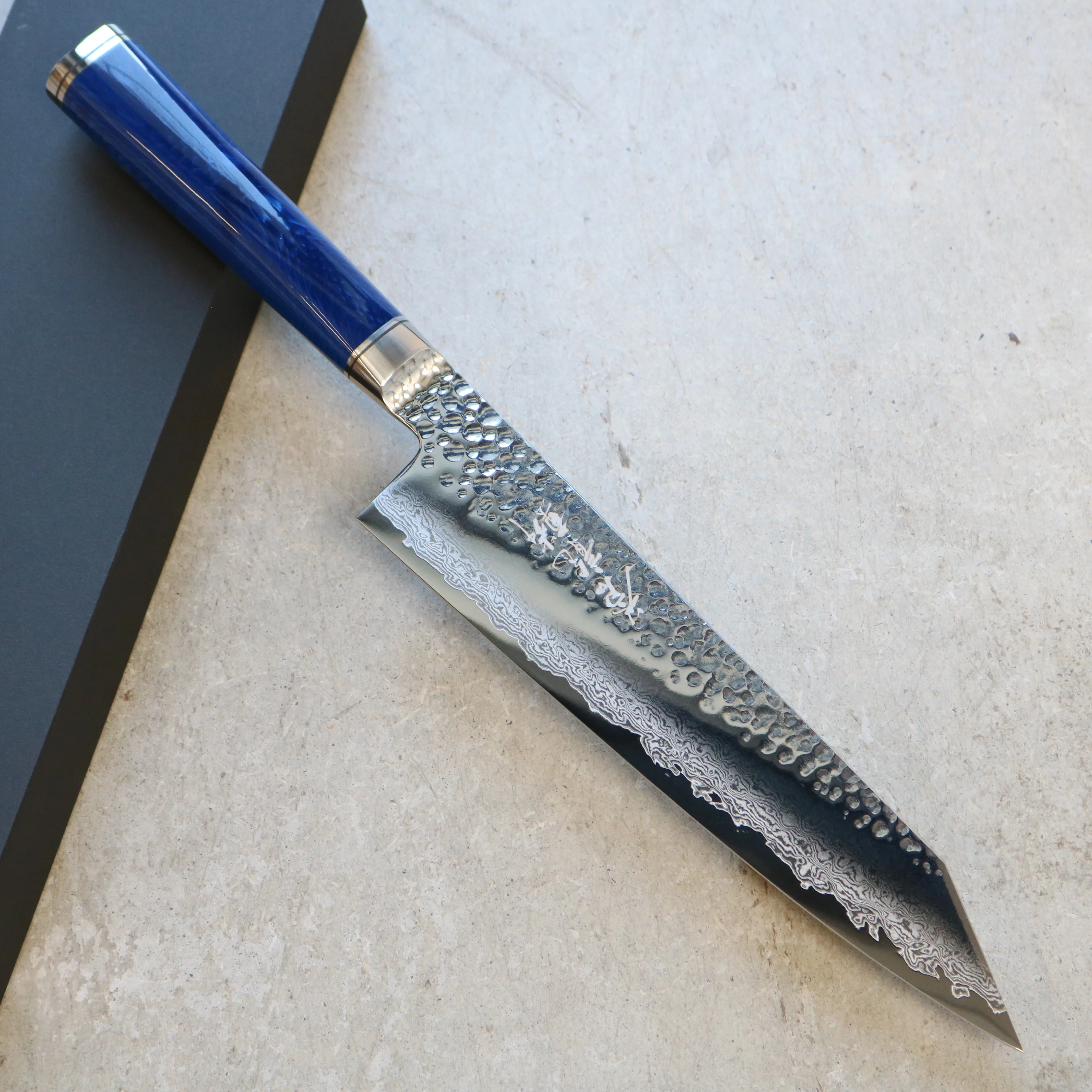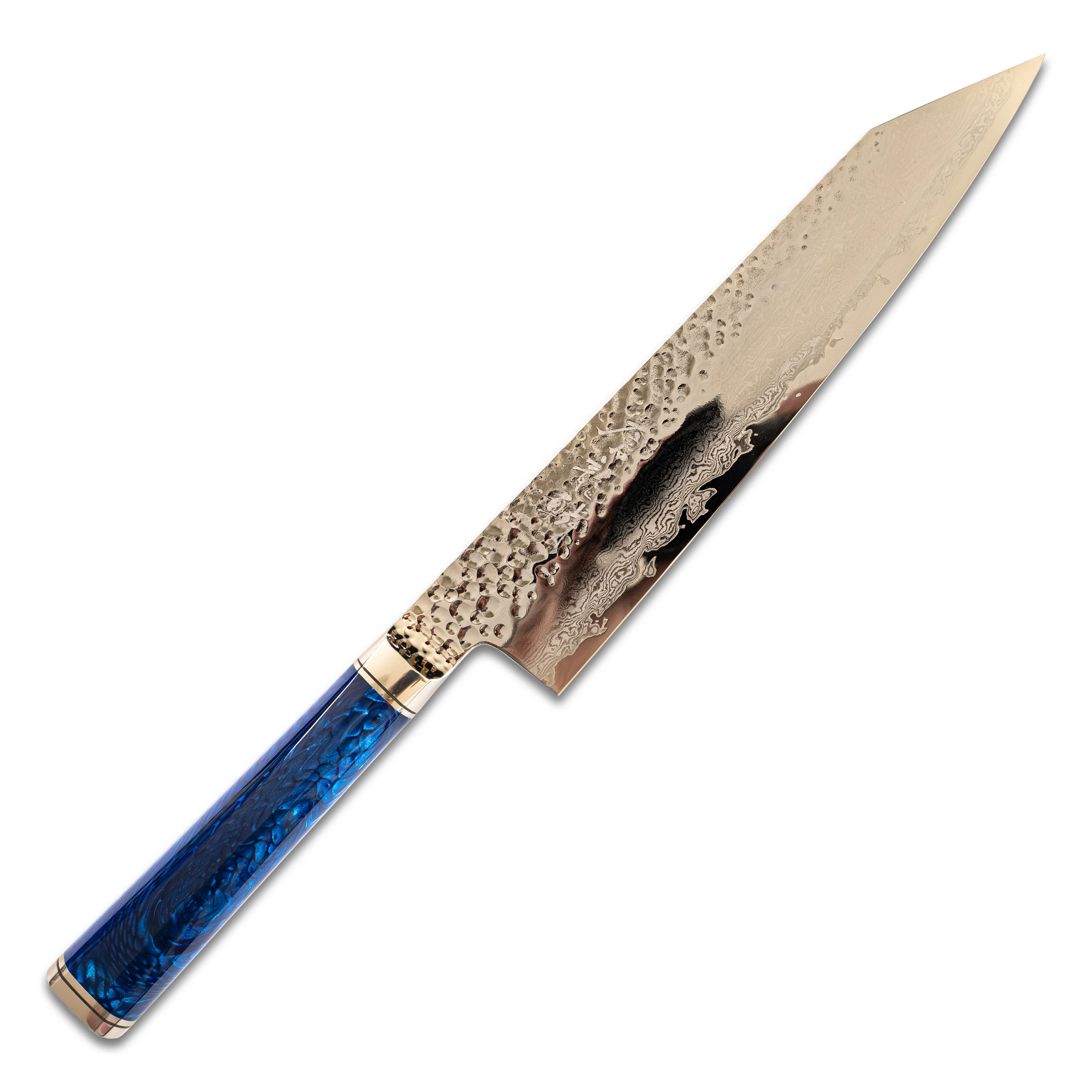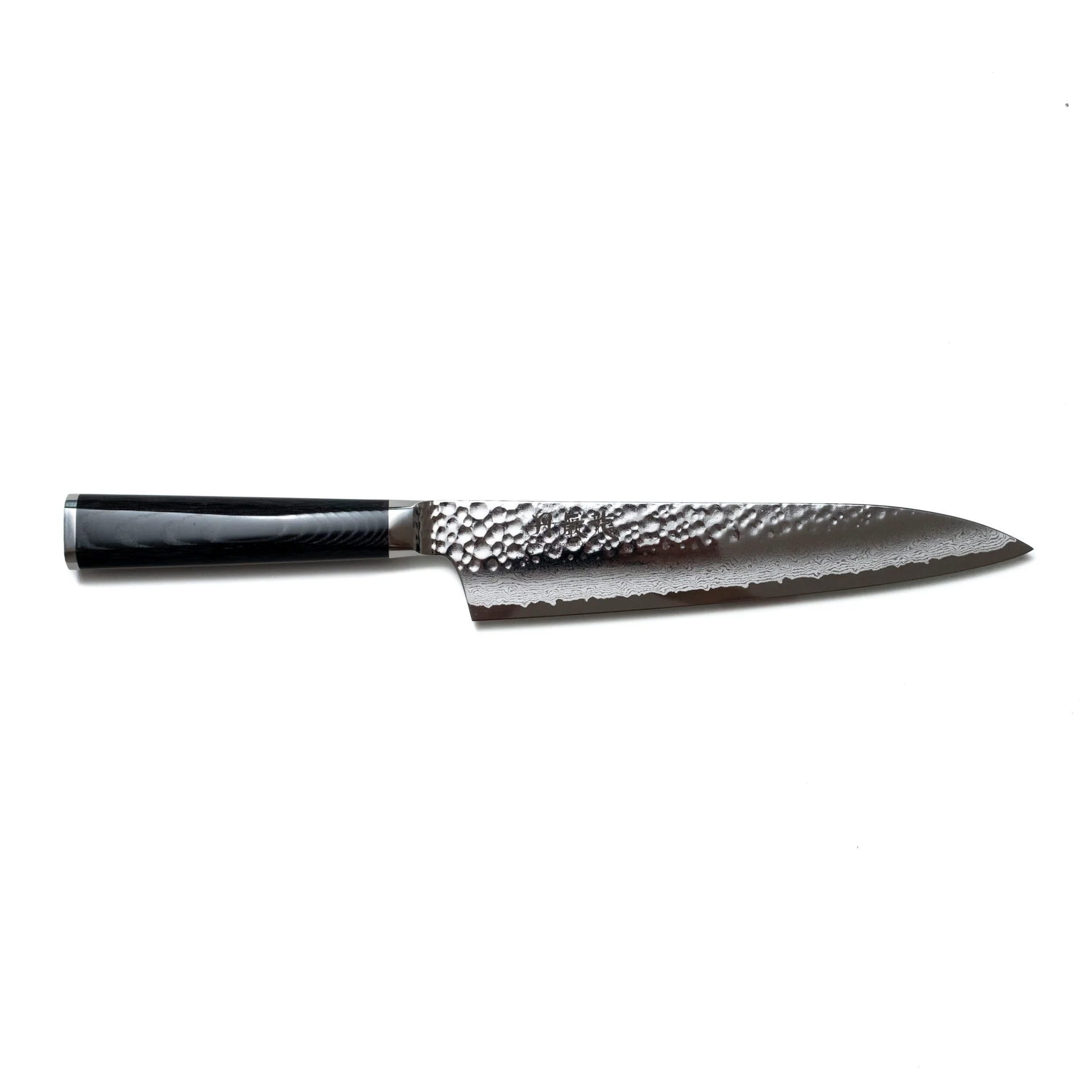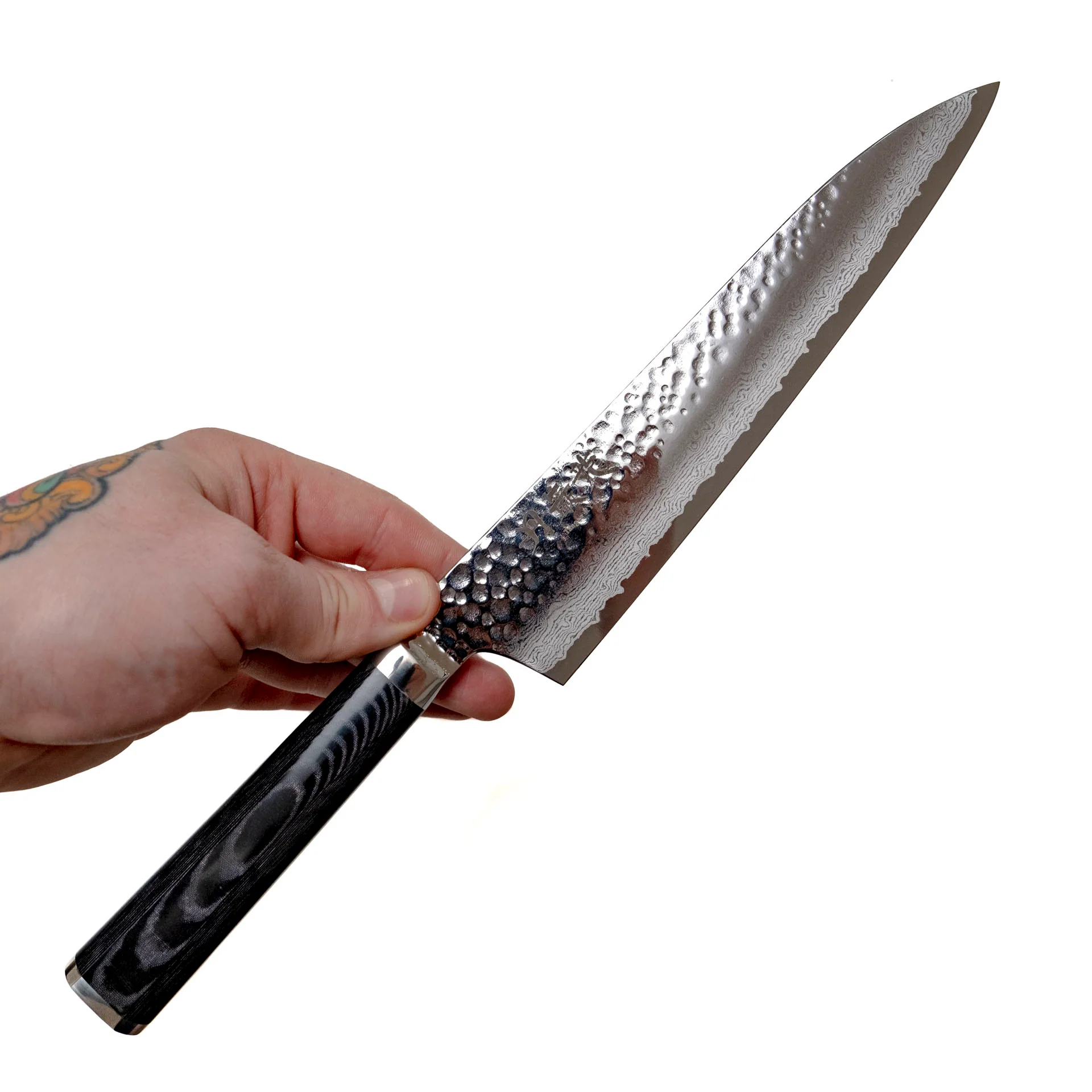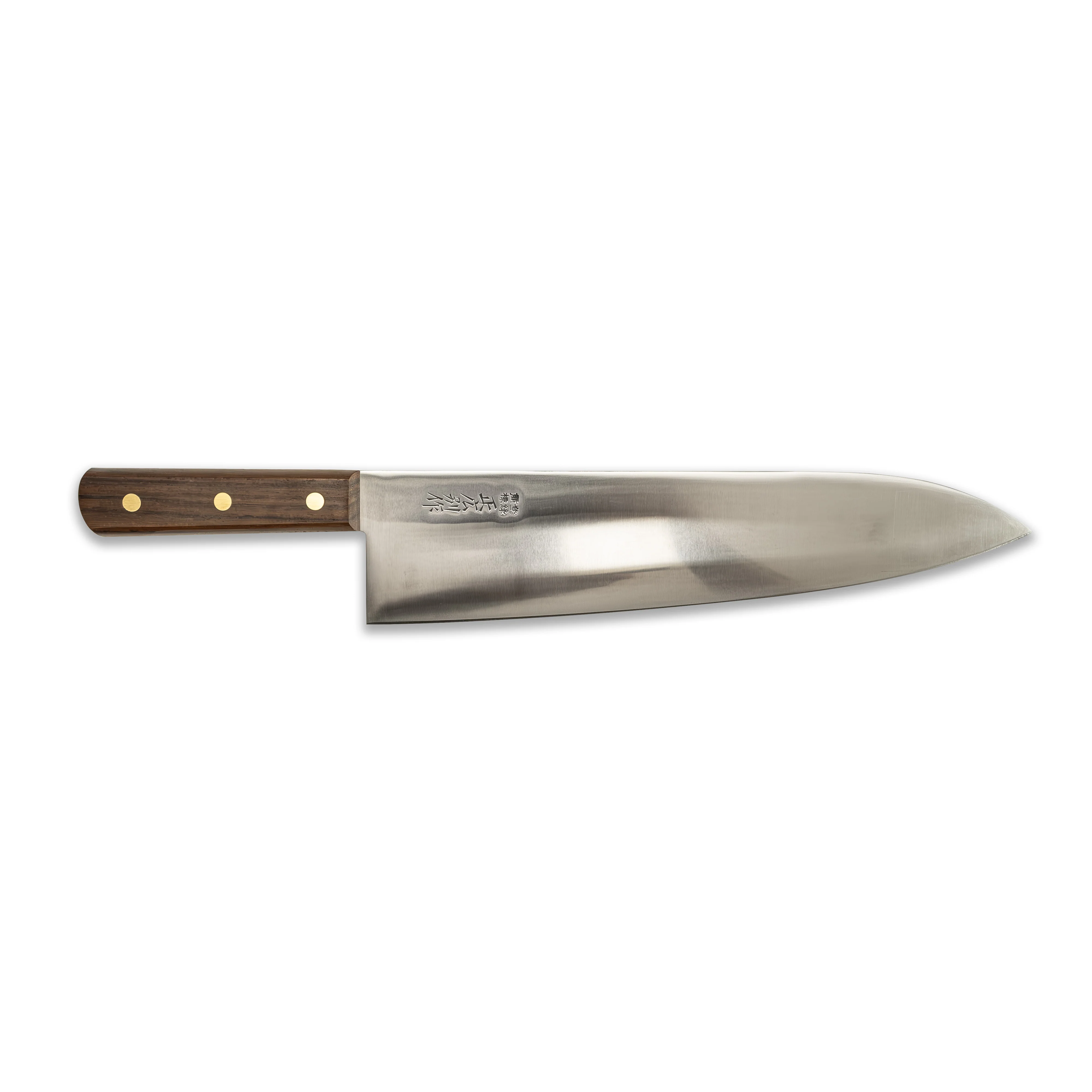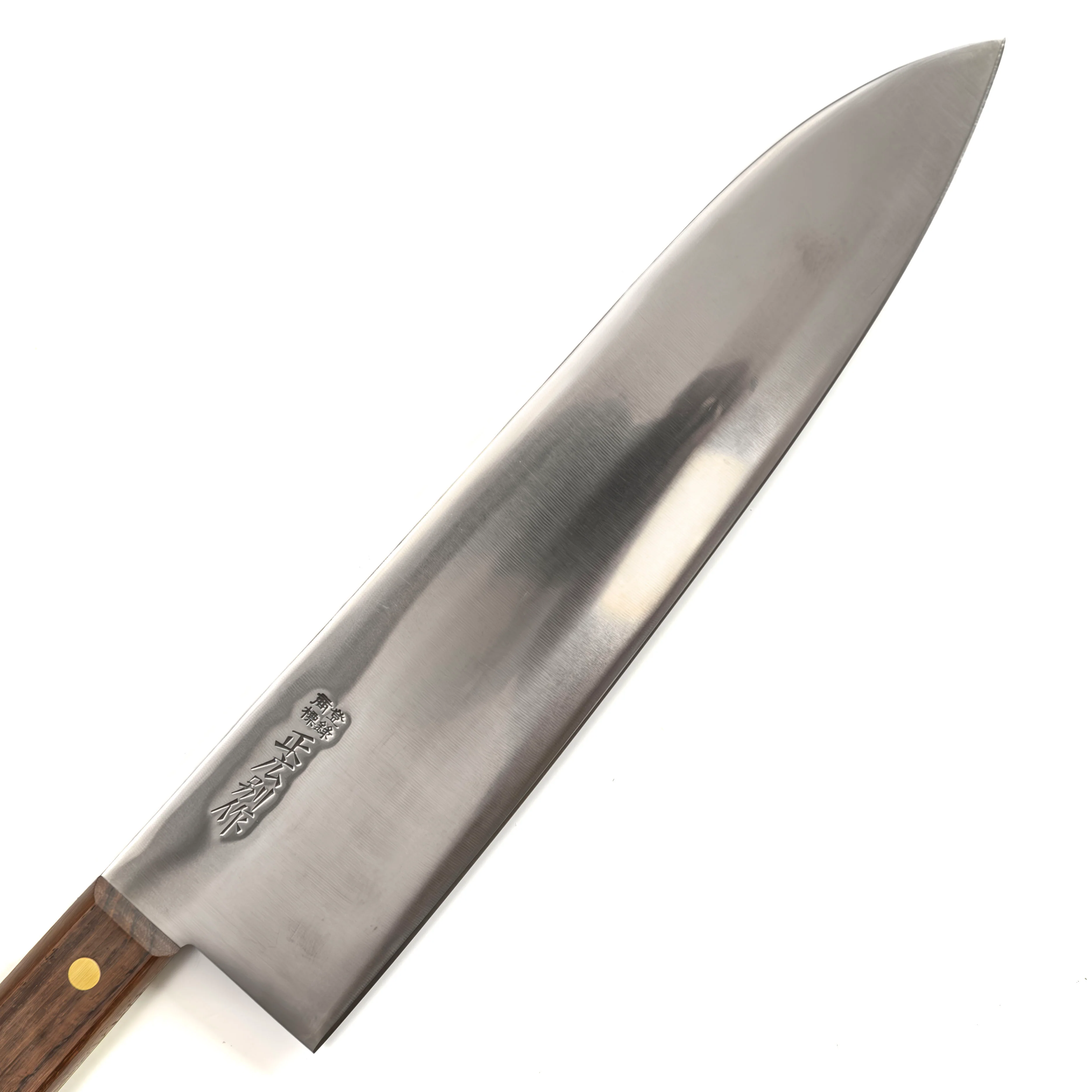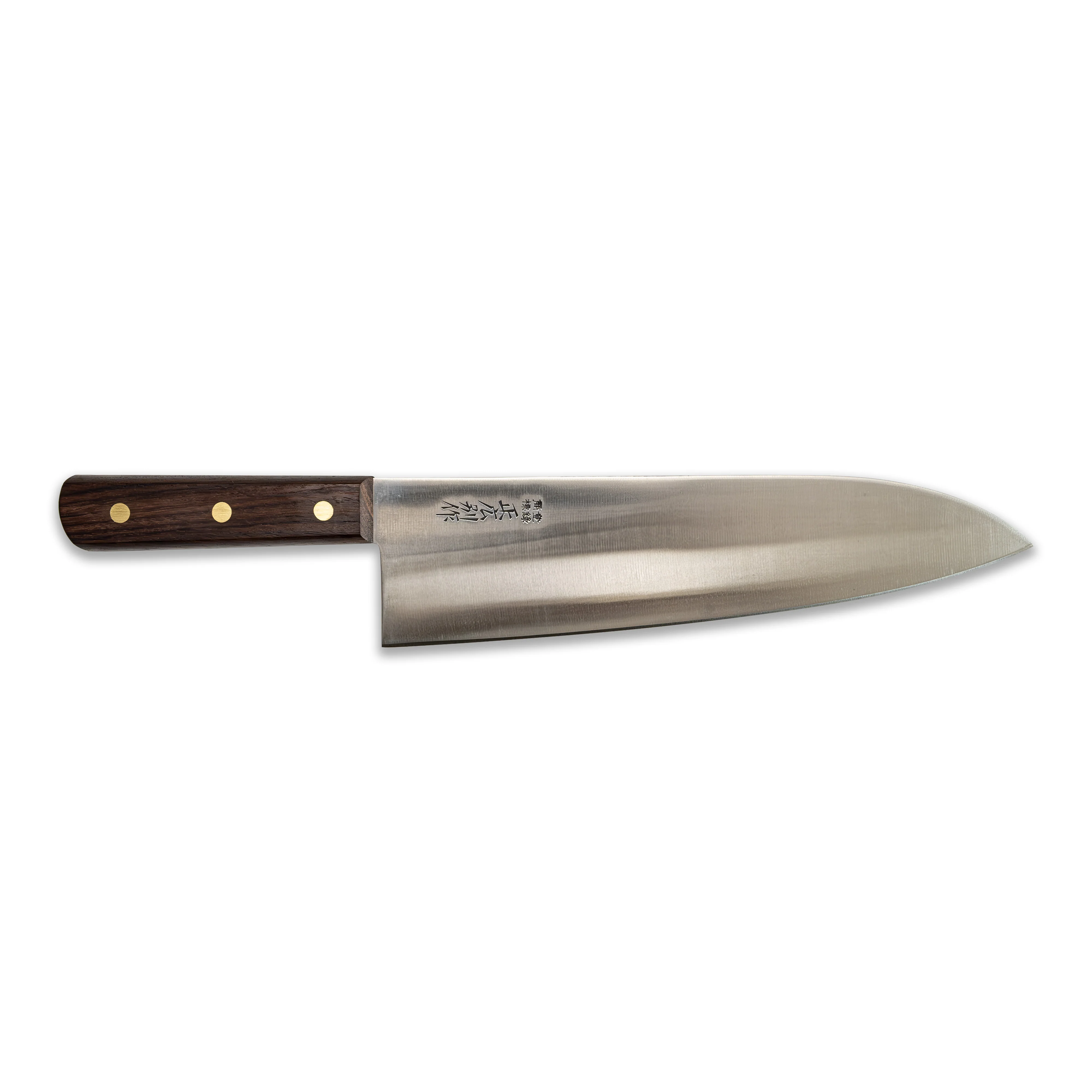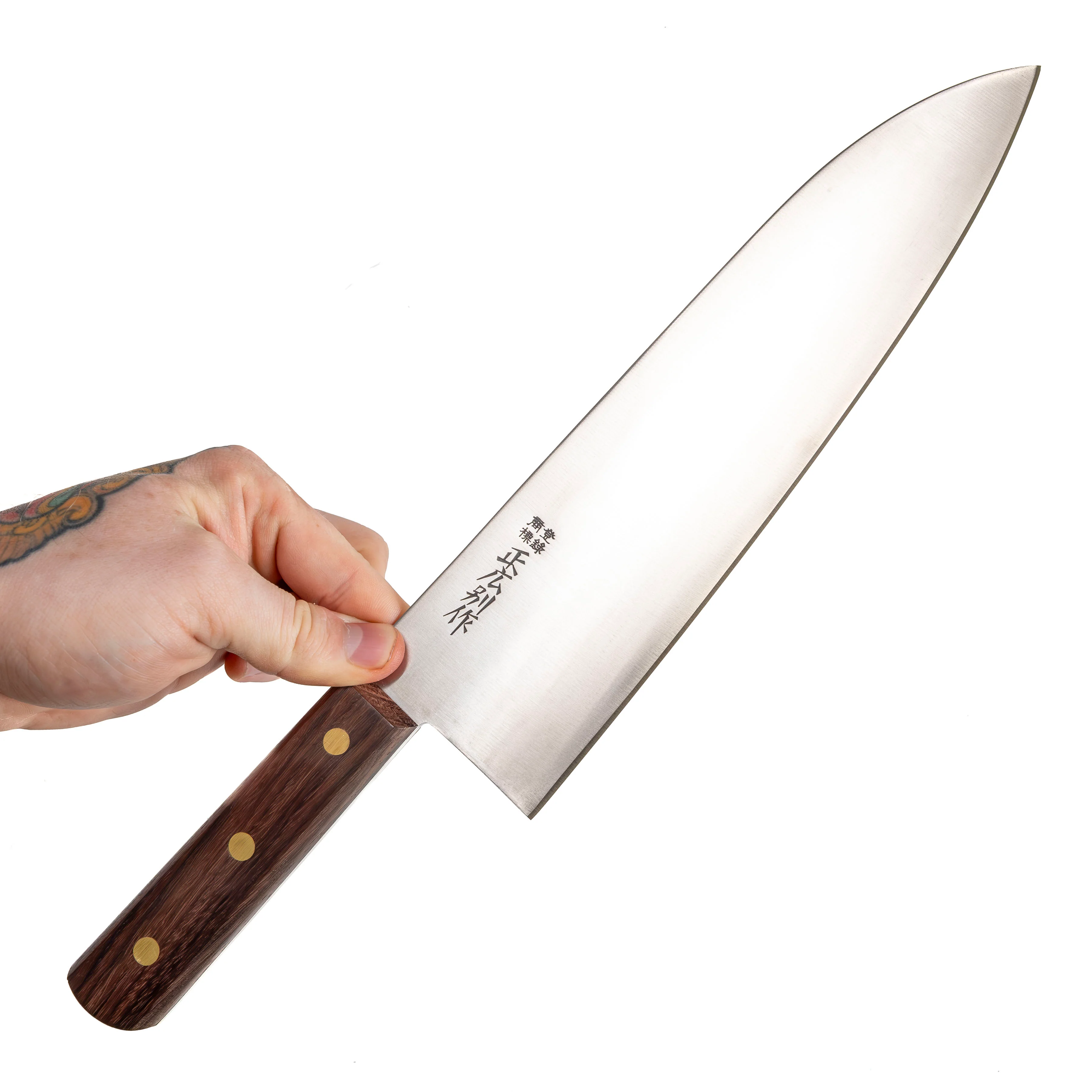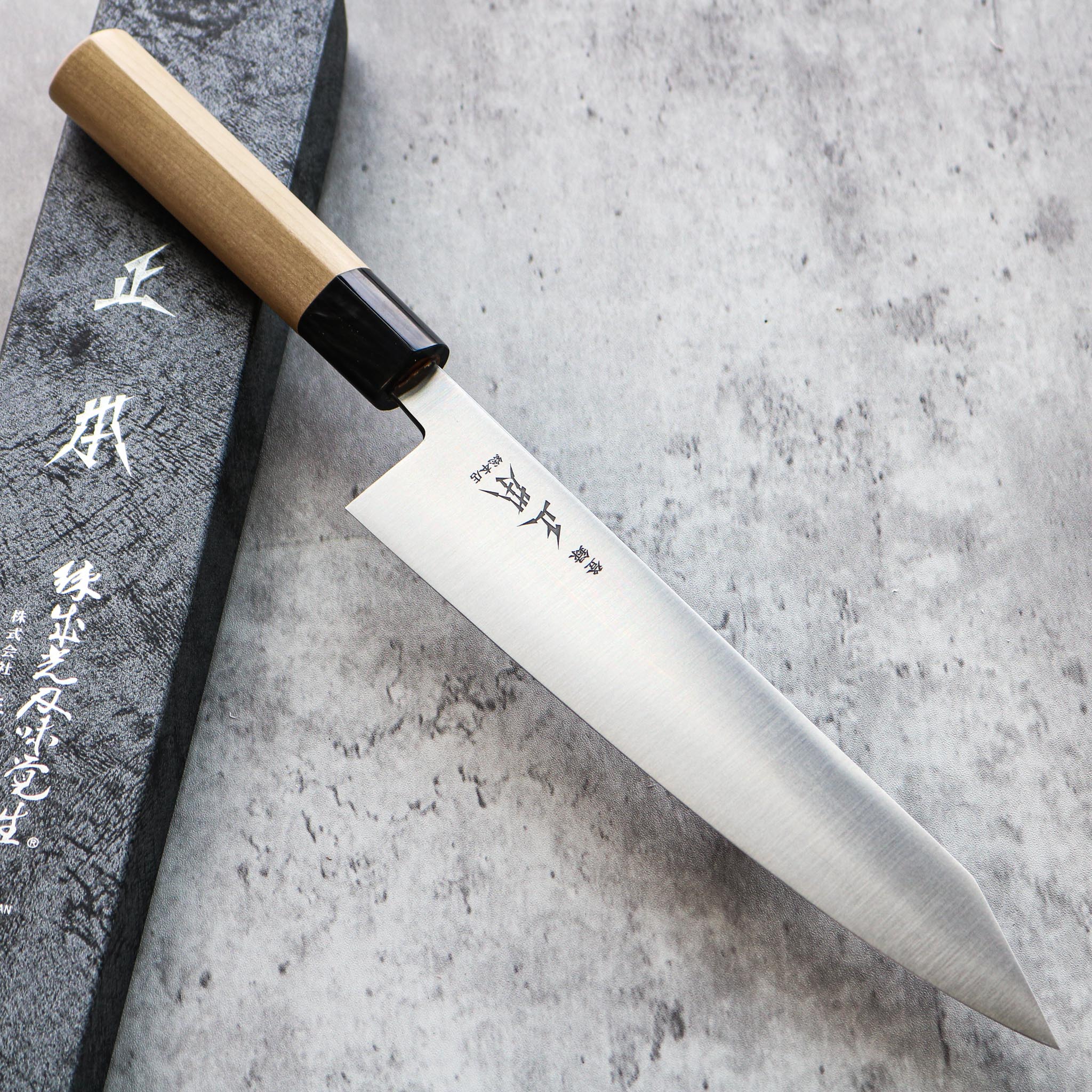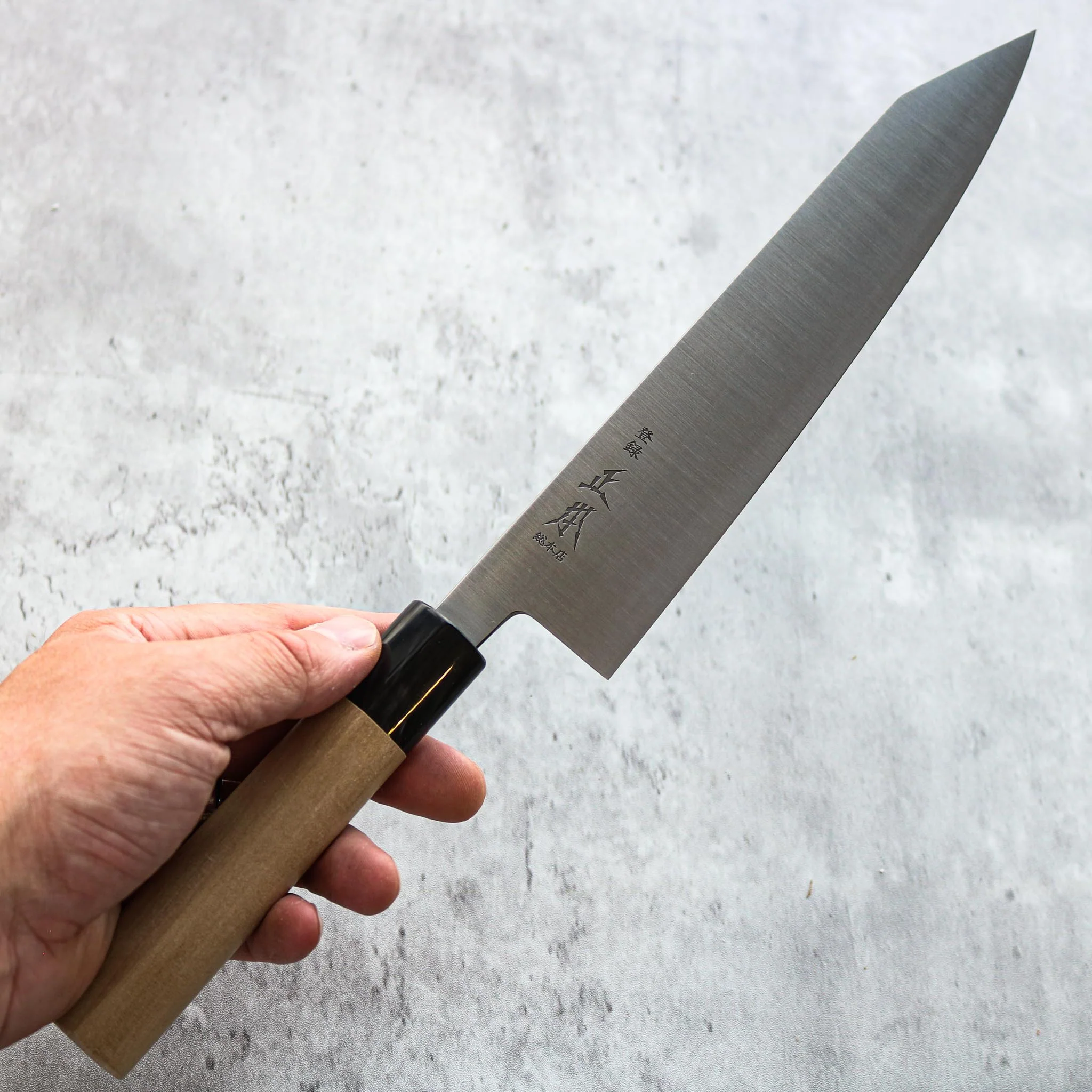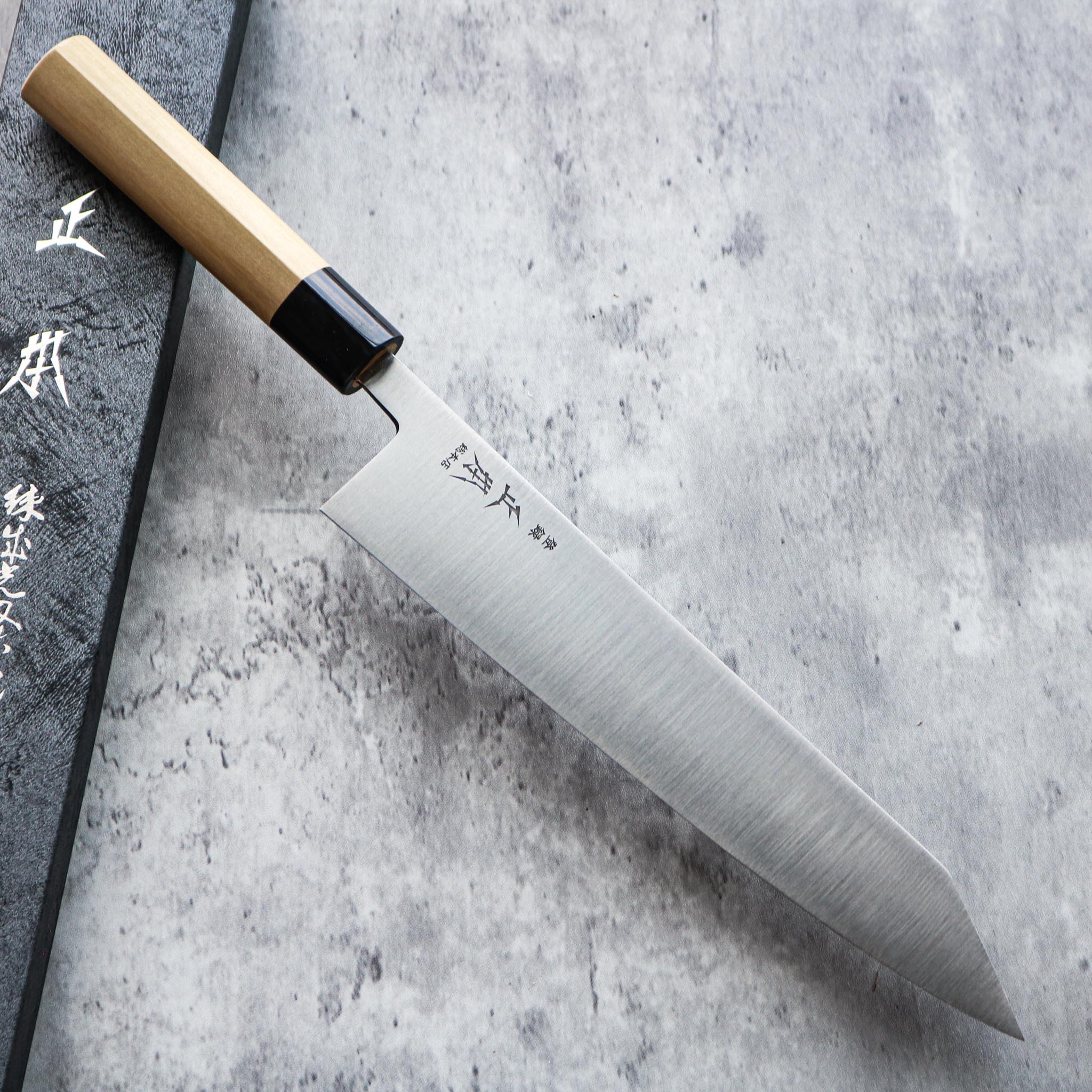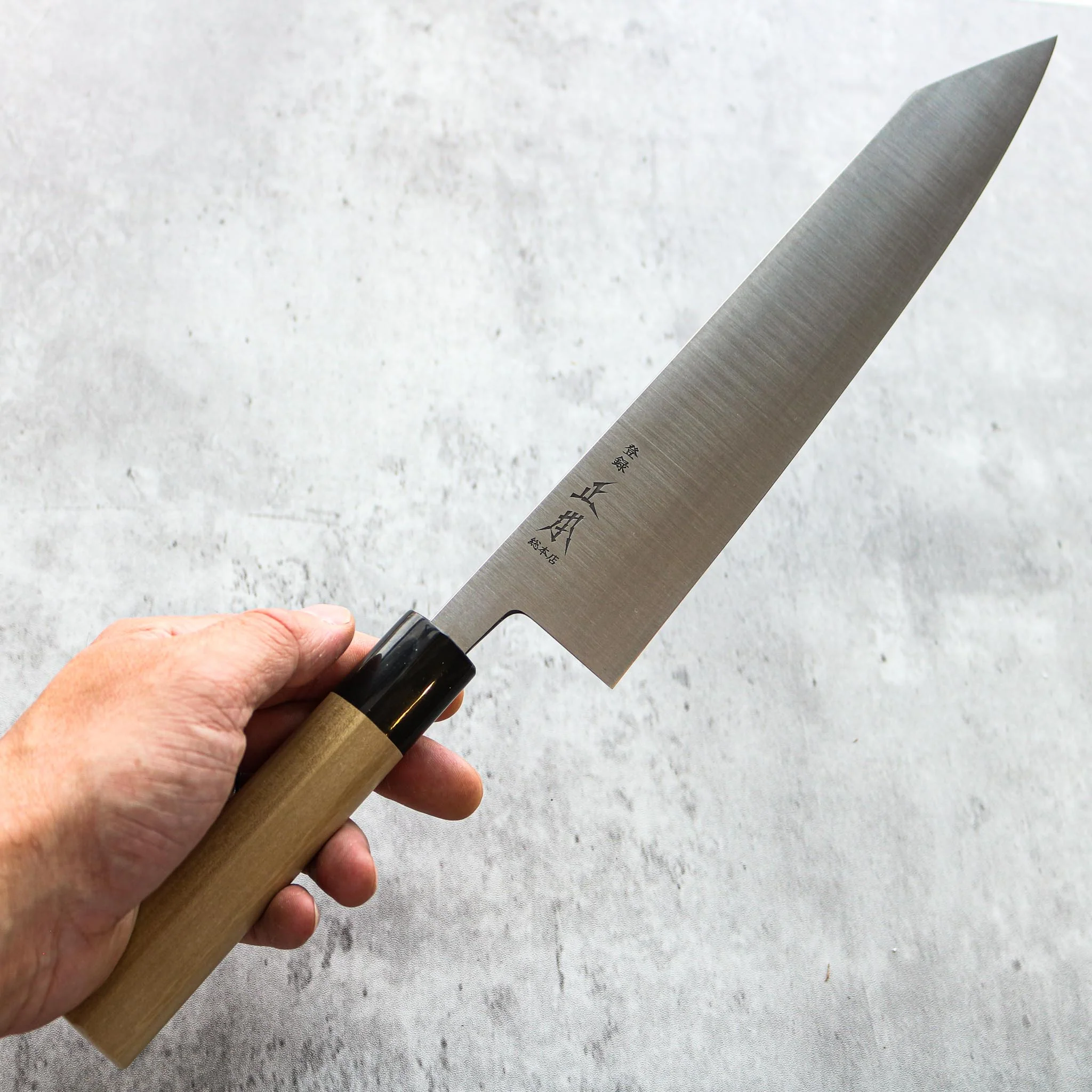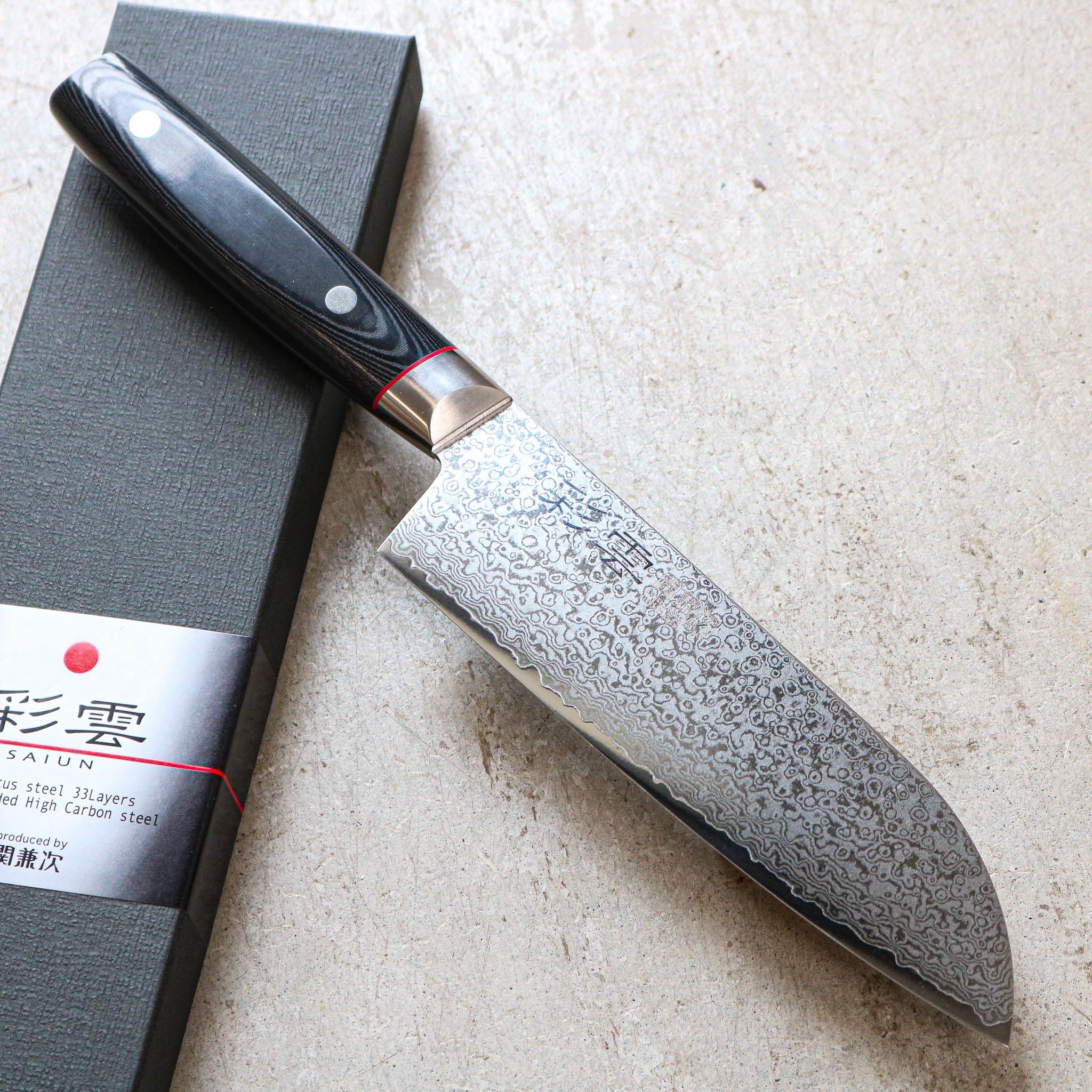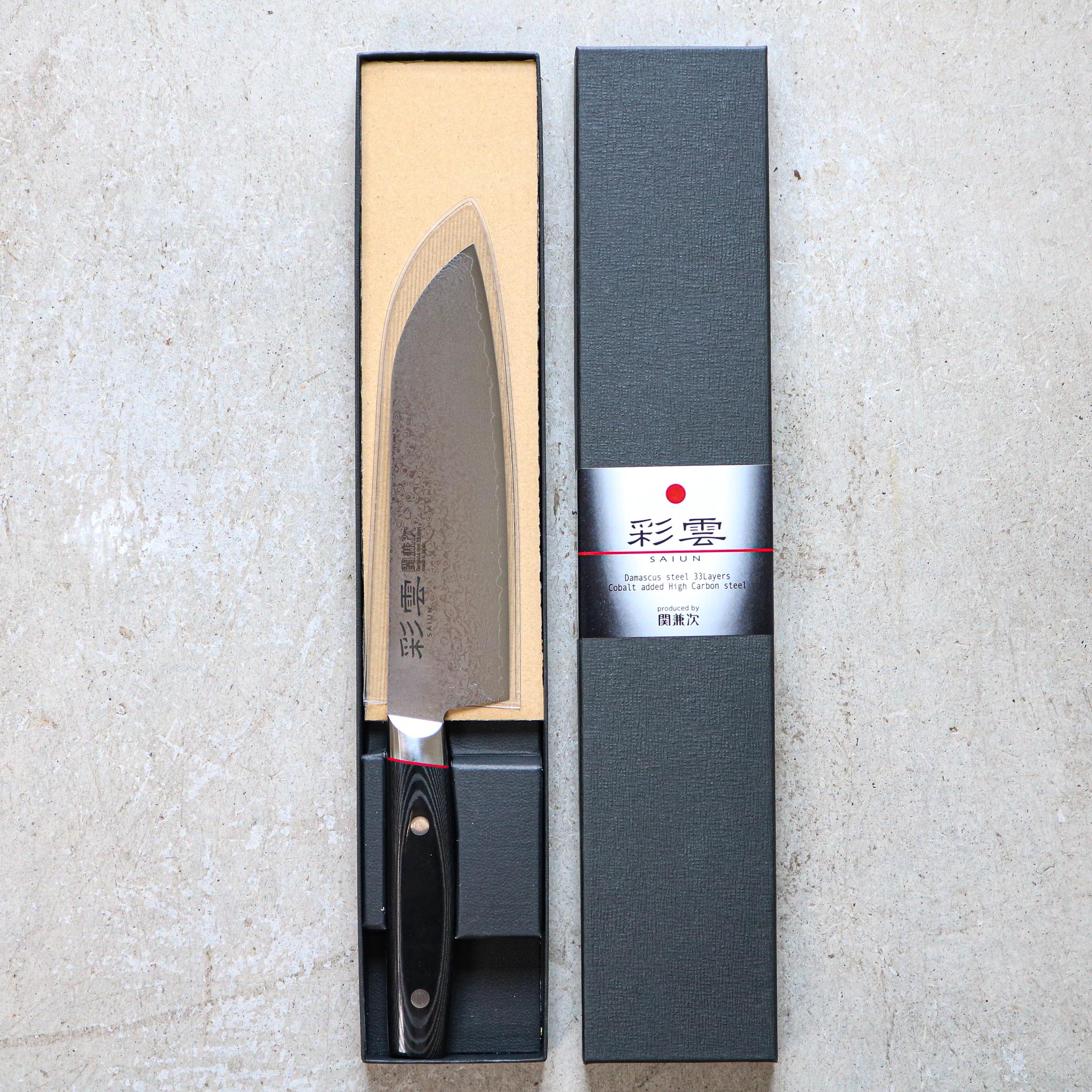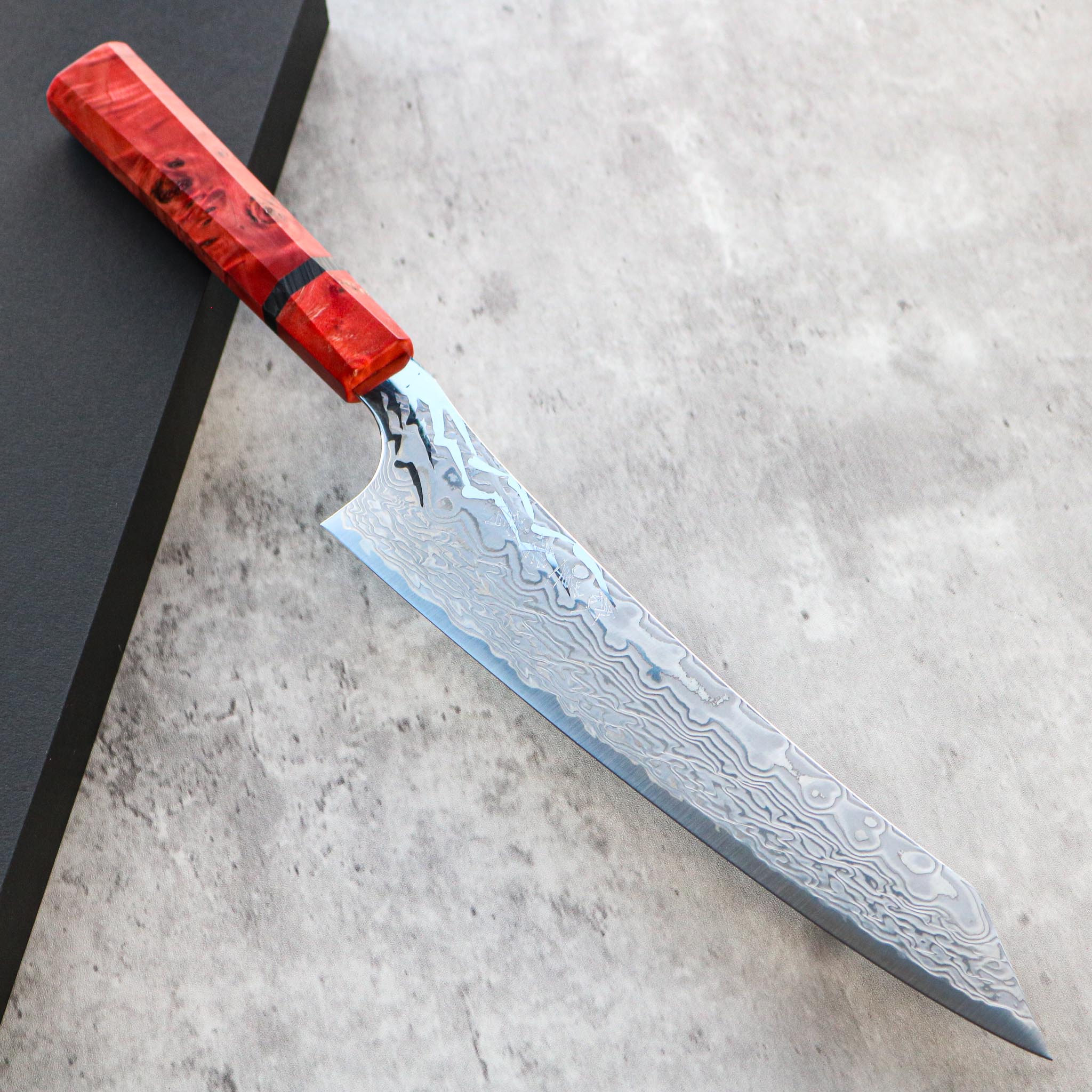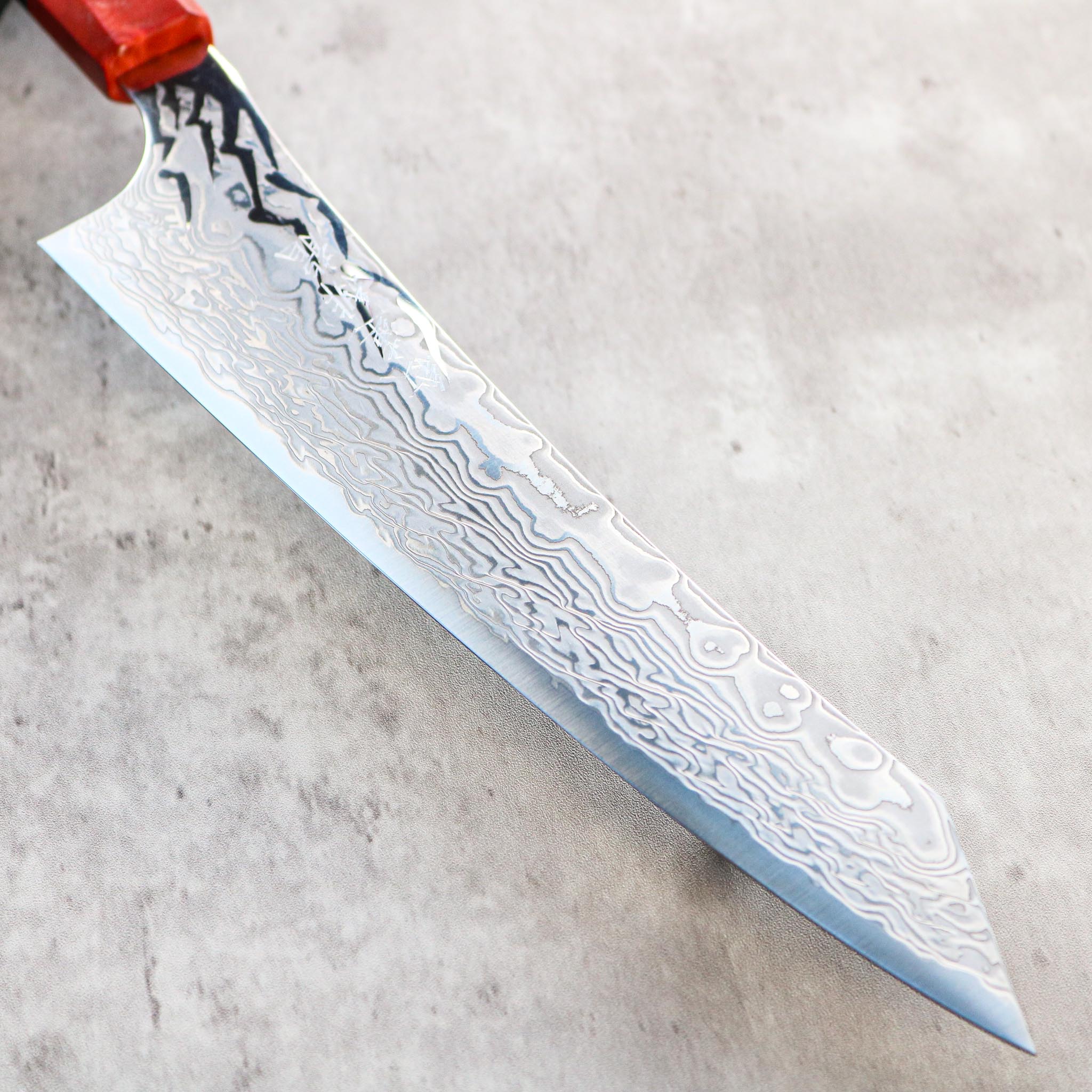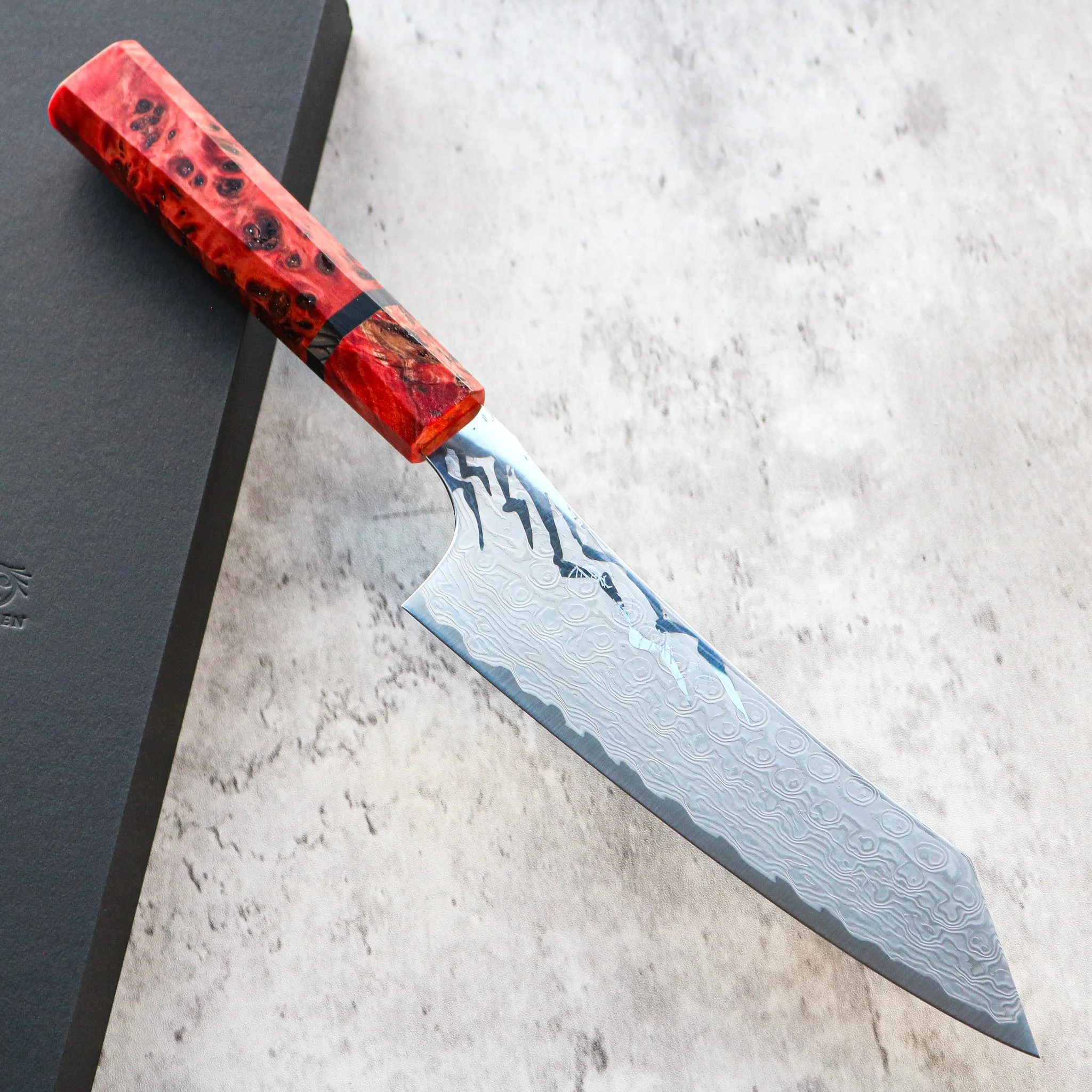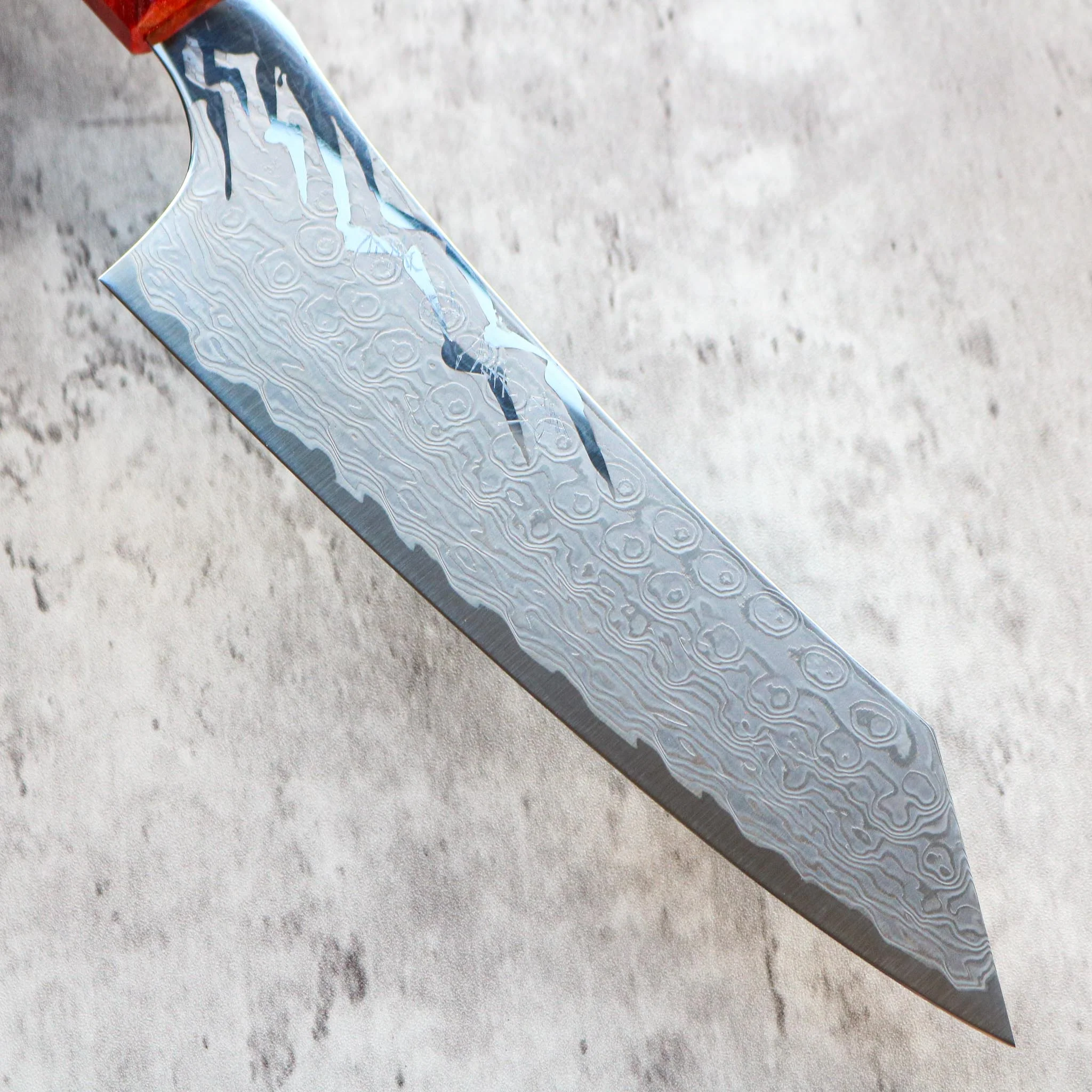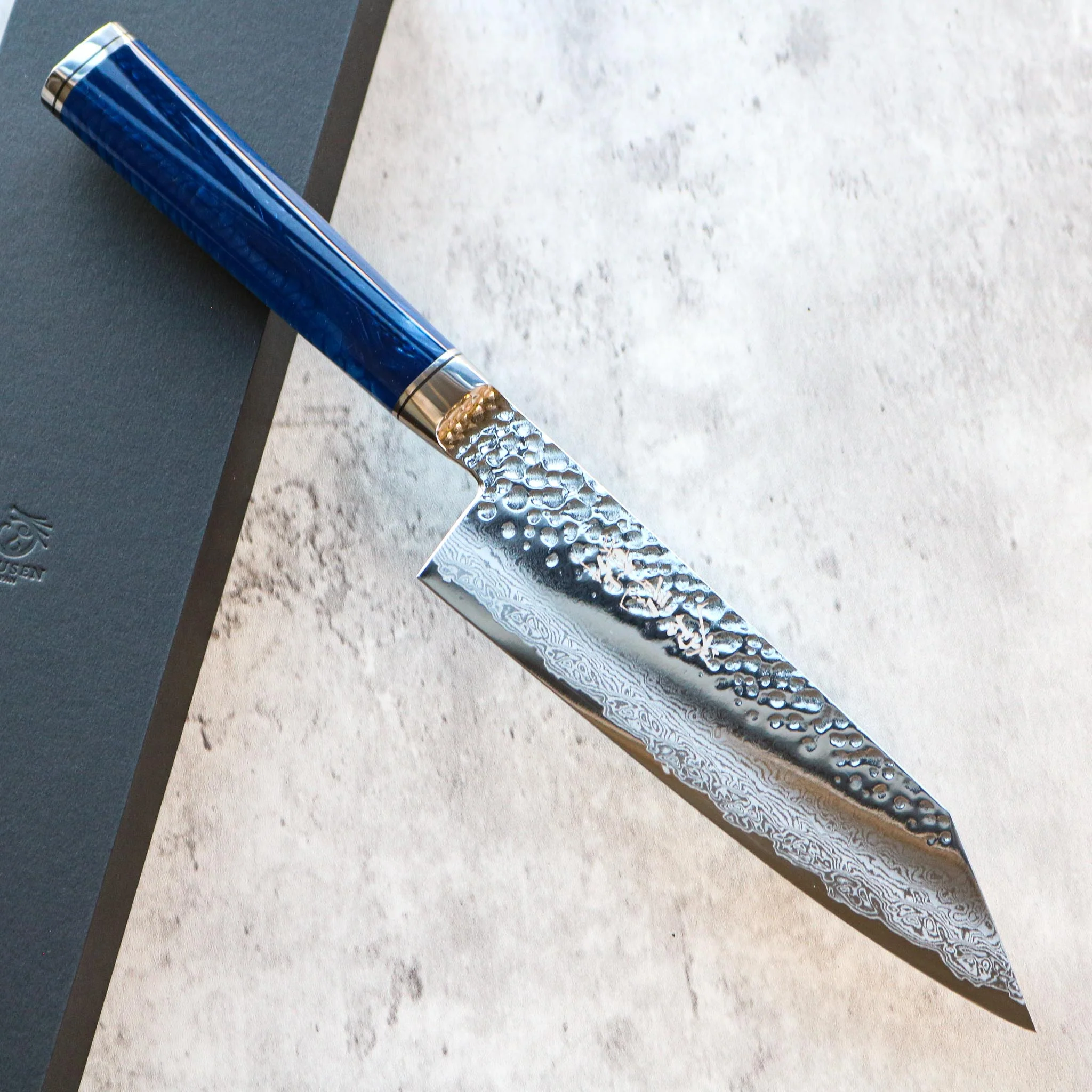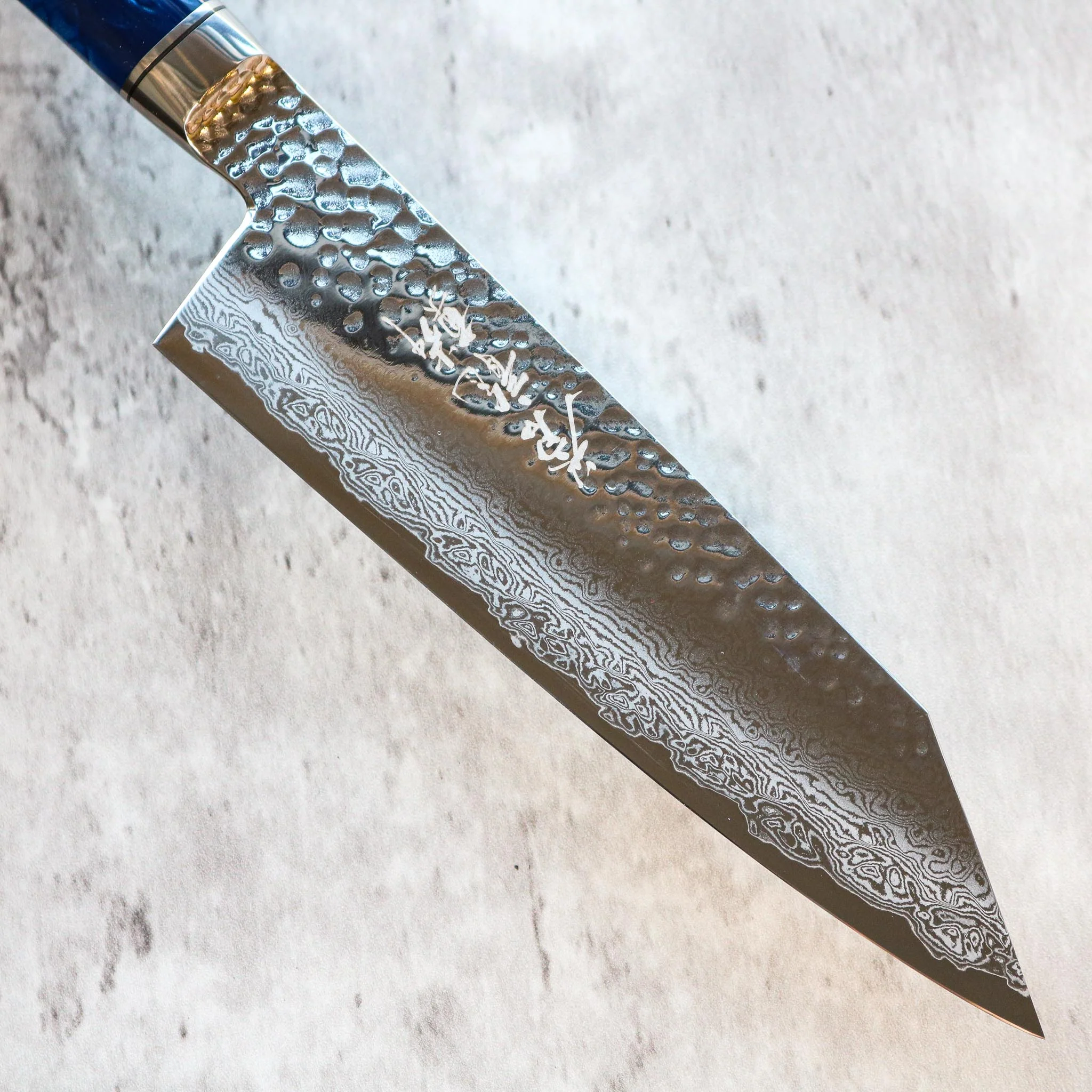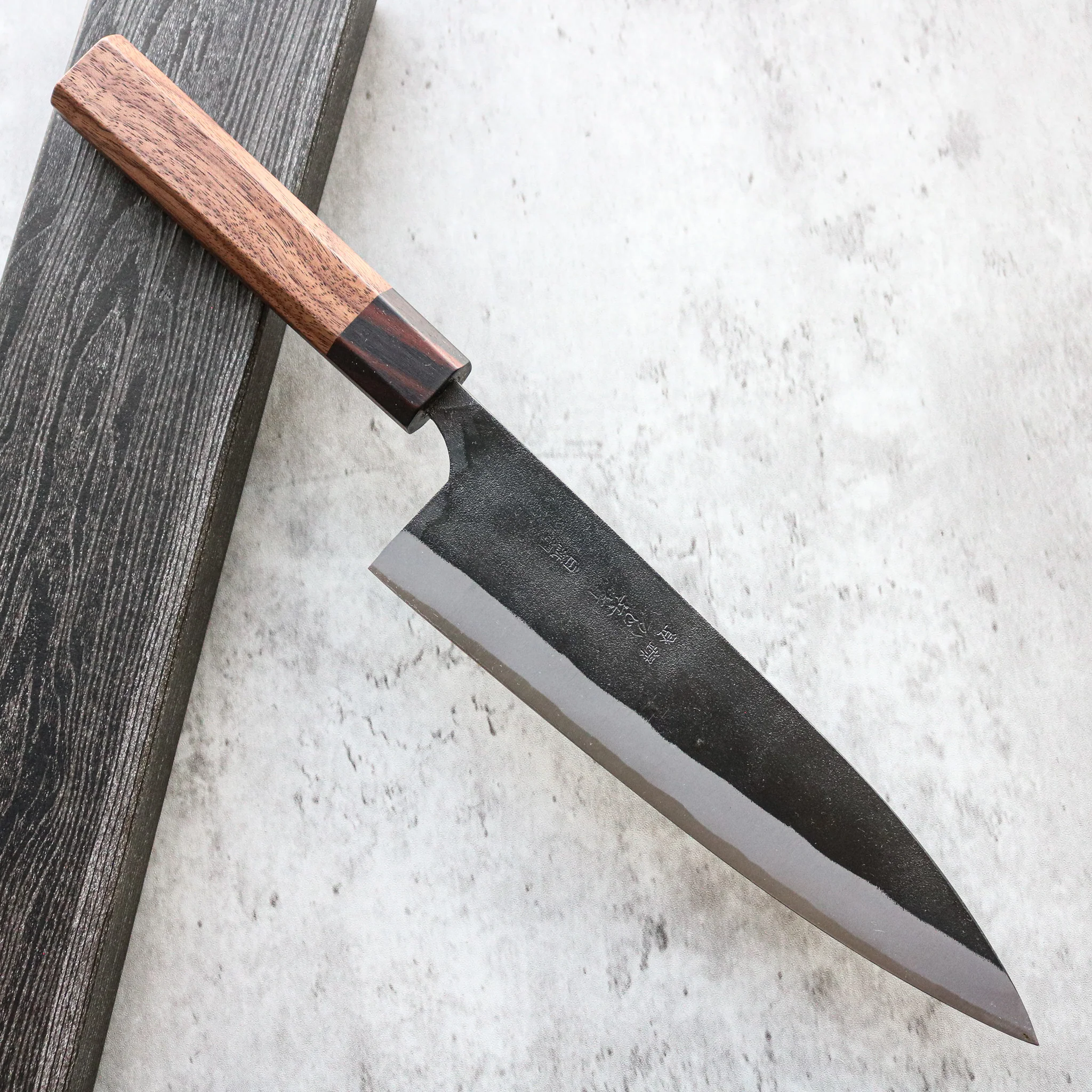
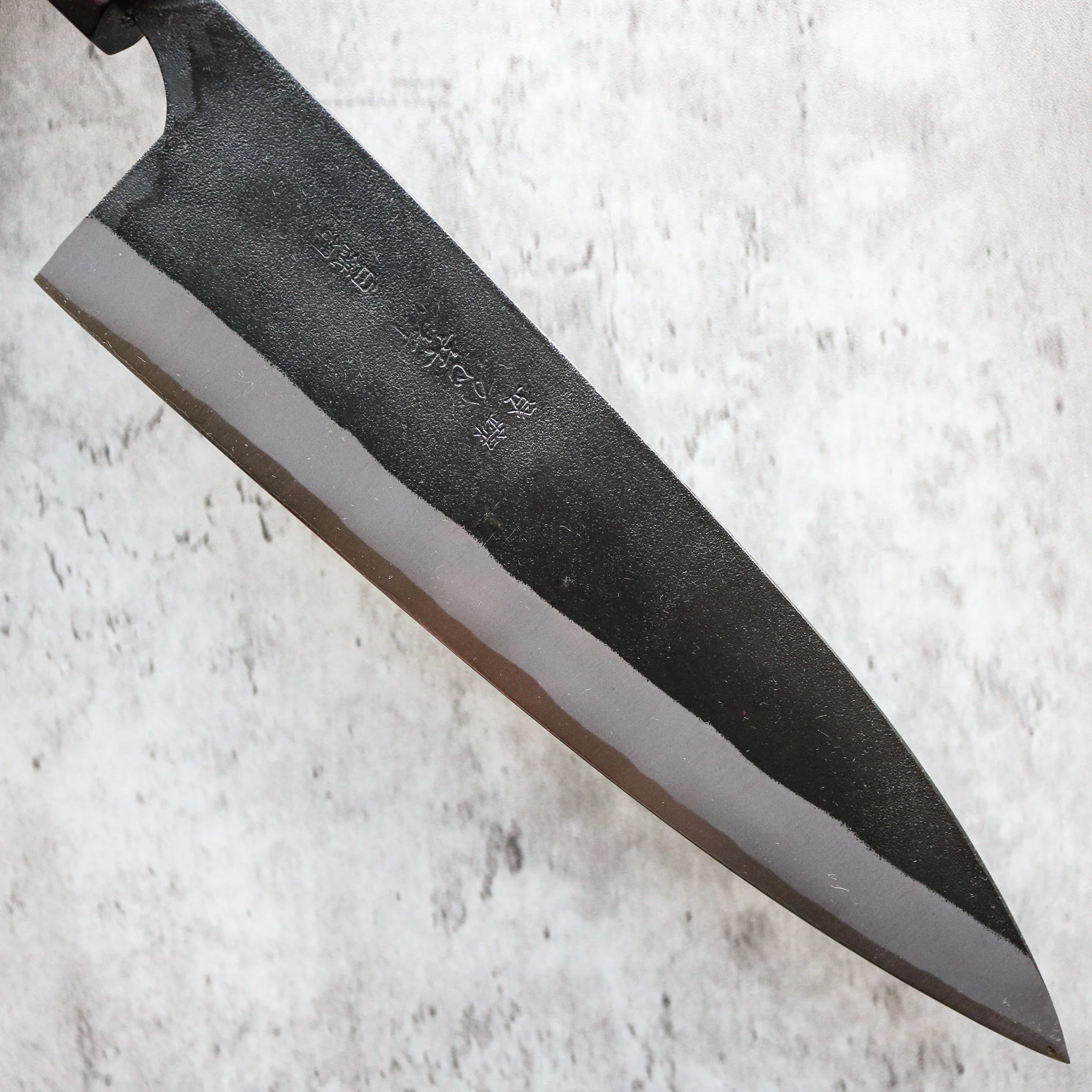
Kajibee Kurouchi Gyuto 240 mm
| Blade Length | 240 mm |
| Total Length | 400 mm |
| Steel | Aogami (blue) #2 |
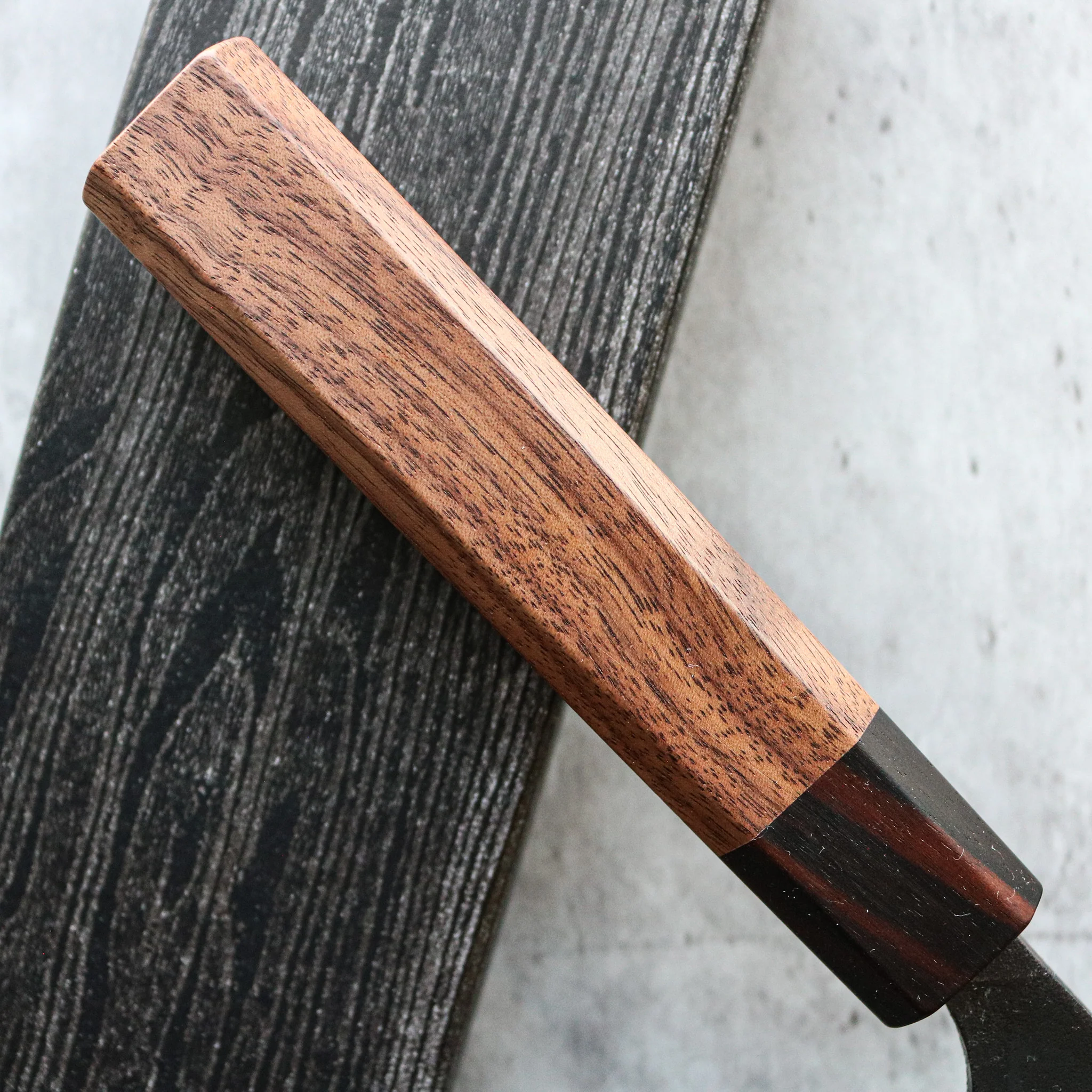
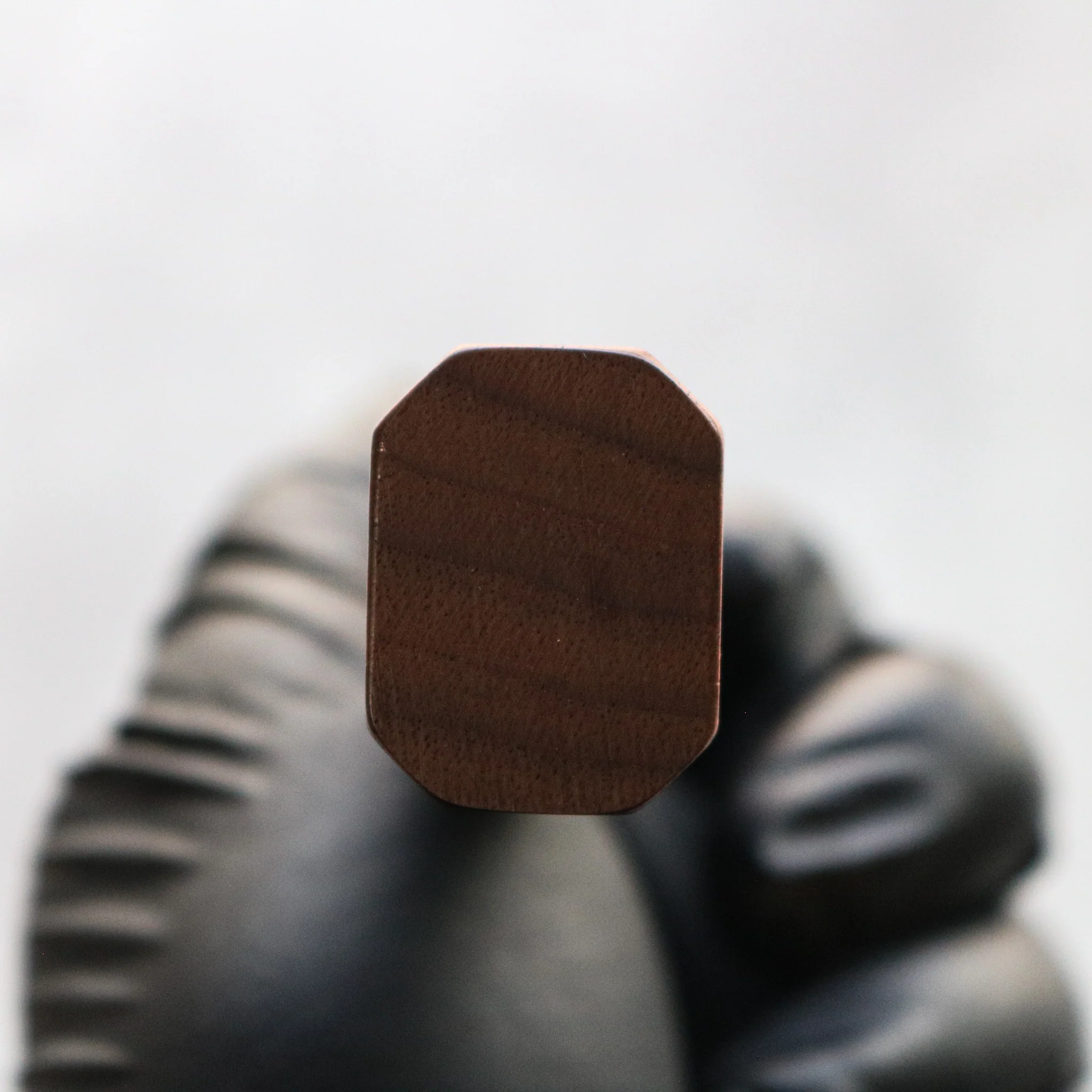
| Handle | Walnut |
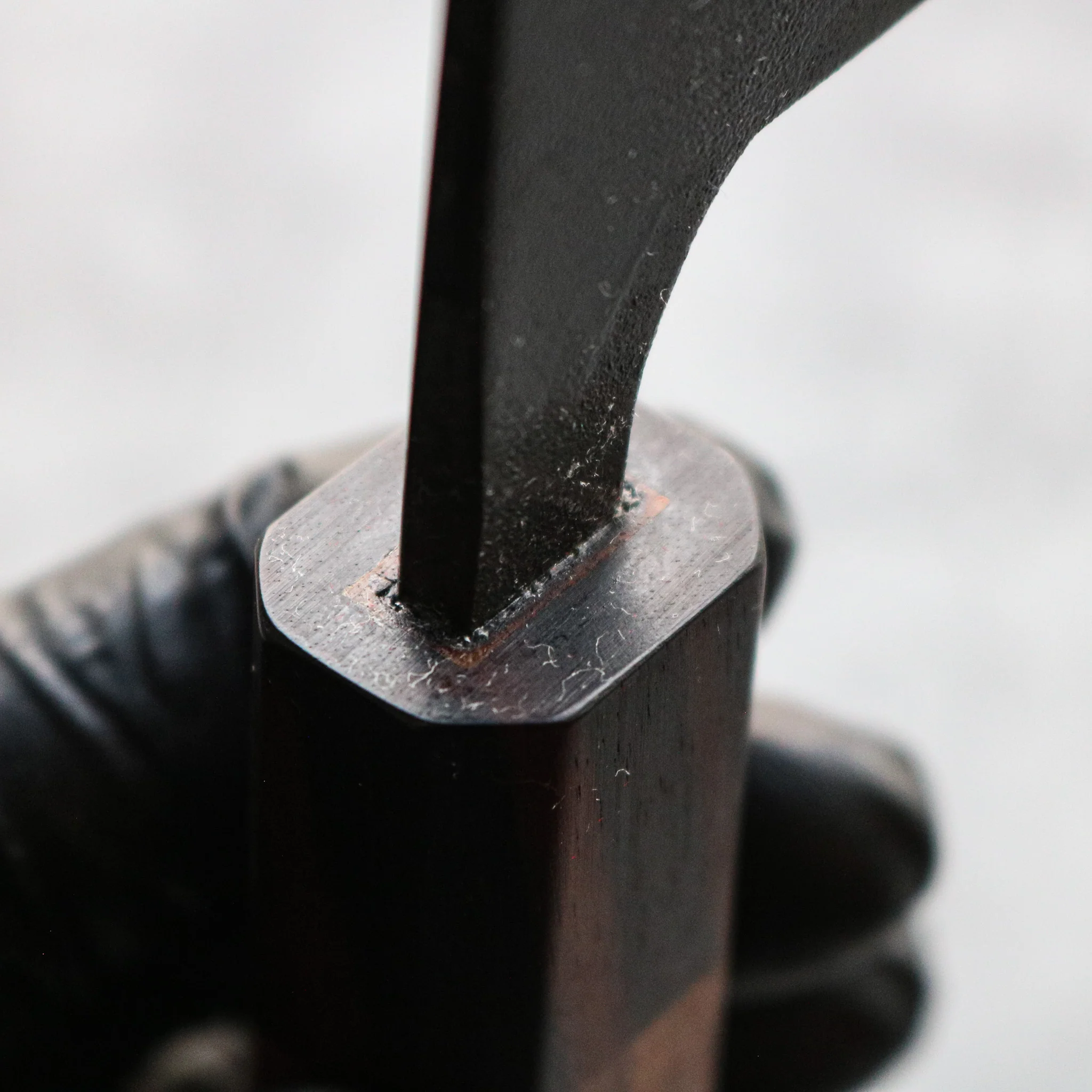
| Ferrule | Ebony |
| Rockwell | 62 |
| Height Spine to heel | 54 mm |
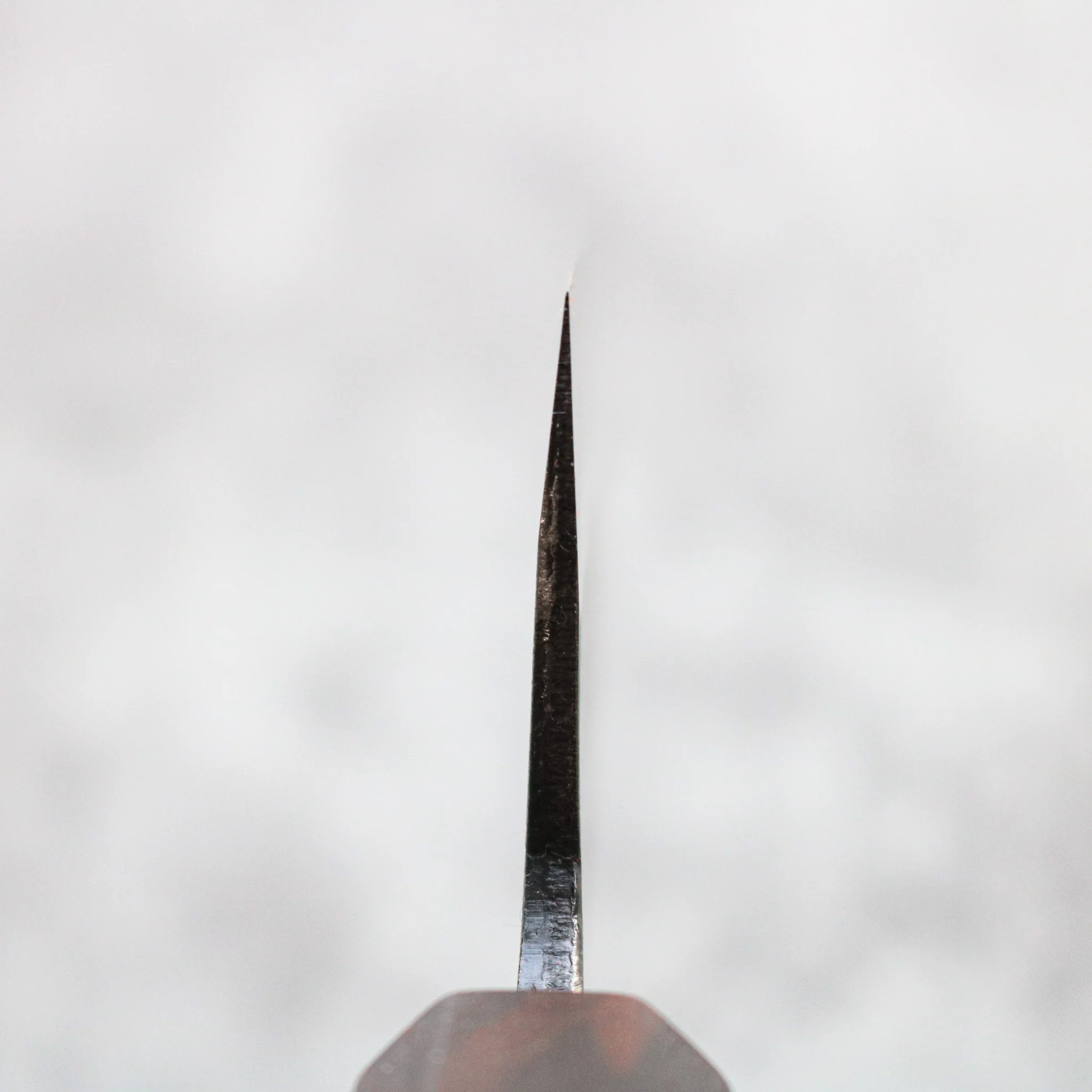
| Width at Spine | 4.35 mm |
| Weight | 227 grams |
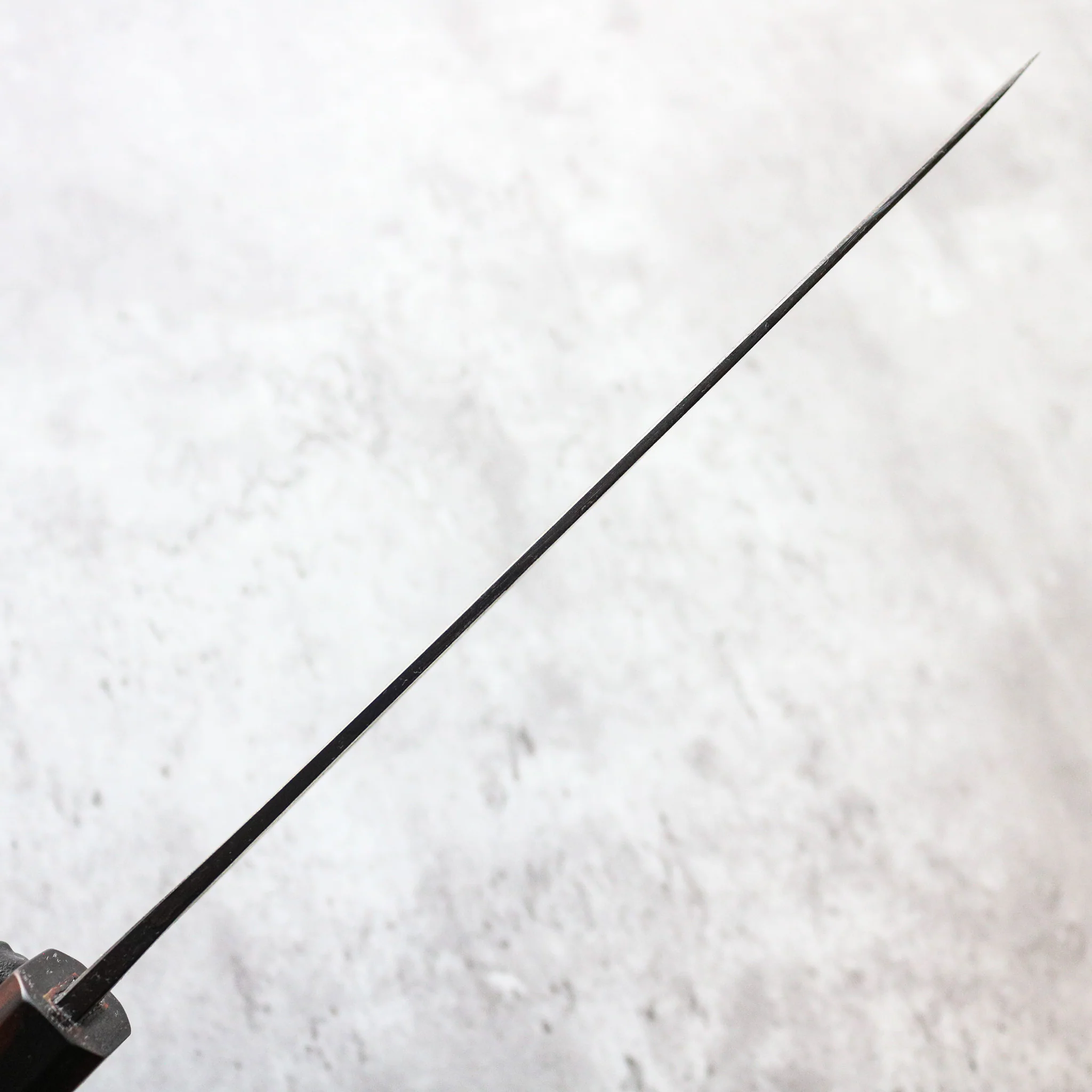
| Bevel | Double (50/50) |
The Blacksmith
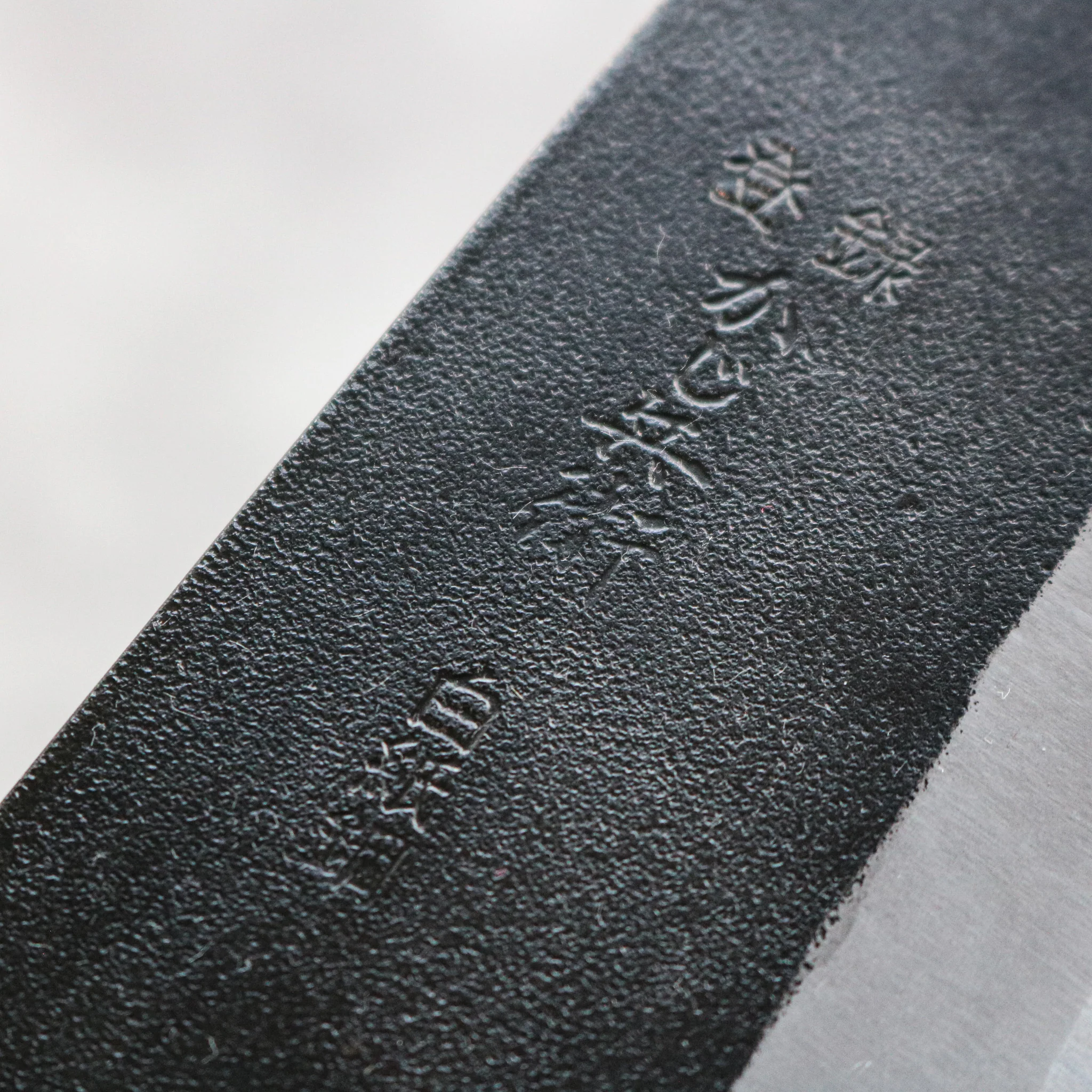
Knives carrying the Kajibee brand are hand forged and polished by a father and son team led by master smith Kunio Ishikawa in the renowned knife making area of Sanjo. Ishikawa-san chooses to work with only traditional materials like the Aogami #2 used to make these beautiful Gyuto. These knives from Kajibee are great workhorse knives. They feature a slightly thicker blade with nice geometry meaning while they've got a solid feel in the hand, they still perform well, and leave plenty of room on the bevels to fine tune them to your taste.
These knives have a food safe lacquer over the bevel to keep it from rusting. This will wear off naturally with use. If you'd like to remove it acetone works very well!
The Knife
The Gyuto is the Japanese equivalent to the western style chef’s knife and is without question the most versatile knife shape. It ranges in size from 180 mm (7 inches) to 240 mm (10 inches), making it longer than the Santoku and Bunka. This length makes it adept at handling almost any task you'll come across in the kitchen, from mincing small ingredients to chopping through larger fruits and vegetables. The longer the knife, the more time it will take to grow accustomed to its length, but the more versatile it will be.
- This Knife is made from 3 layers of material; A layer of iron on each side protecting a layer of carbon steel at the core, in a process referred to as Sanmai or forge welding. Iron and carbon steel are both susceptible to rust and must be kept dry and clean at all time’s to avoid oxidation and discolouration.
- Simply wipe the knife with a damp cloth immediately after use.
- Wash with regular dish soap and warm water using a none abrasive sponge or cloth.
- Never put your knife in the dishwasher! The extreme heat will ruin the wooden handle.
- Highly acidic ingredients (Onions, Tomatoes, Citrus) Will cause rust and oxidation to happen faster, thus the user must ensure the knife is wiped clean immediately after working with such an ingredient.
- Should any rust form it can be removed using a rust eraser or a mixture of Baking soda and water to simply scrub it clean.
- Avoid Bones, Frozen foods, nuts and hard candies or anything other than fruits, vegetables and proteins.
Original: $364.20
-70%$364.20
$109.26Product Information
Product Information
Shipping & Returns
Shipping & Returns
Description
| Blade Length | 240 mm |
| Total Length | 400 mm |
| Steel | Aogami (blue) #2 |
| Handle | Walnut |
| Ferrule | Ebony |
| Rockwell | 62 |
| Height Spine to heel | 54 mm |
| Width at Spine | 4.35 mm |
| Weight | 227 grams |
| Bevel | Double (50/50) |
The Blacksmith
Knives carrying the Kajibee brand are hand forged and polished by a father and son team led by master smith Kunio Ishikawa in the renowned knife making area of Sanjo. Ishikawa-san chooses to work with only traditional materials like the Aogami #2 used to make these beautiful Gyuto. These knives from Kajibee are great workhorse knives. They feature a slightly thicker blade with nice geometry meaning while they've got a solid feel in the hand, they still perform well, and leave plenty of room on the bevels to fine tune them to your taste.
These knives have a food safe lacquer over the bevel to keep it from rusting. This will wear off naturally with use. If you'd like to remove it acetone works very well!
The Knife
The Gyuto is the Japanese equivalent to the western style chef’s knife and is without question the most versatile knife shape. It ranges in size from 180 mm (7 inches) to 240 mm (10 inches), making it longer than the Santoku and Bunka. This length makes it adept at handling almost any task you'll come across in the kitchen, from mincing small ingredients to chopping through larger fruits and vegetables. The longer the knife, the more time it will take to grow accustomed to its length, but the more versatile it will be.
- This Knife is made from 3 layers of material; A layer of iron on each side protecting a layer of carbon steel at the core, in a process referred to as Sanmai or forge welding. Iron and carbon steel are both susceptible to rust and must be kept dry and clean at all time’s to avoid oxidation and discolouration.
- Simply wipe the knife with a damp cloth immediately after use.
- Wash with regular dish soap and warm water using a none abrasive sponge or cloth.
- Never put your knife in the dishwasher! The extreme heat will ruin the wooden handle.
- Highly acidic ingredients (Onions, Tomatoes, Citrus) Will cause rust and oxidation to happen faster, thus the user must ensure the knife is wiped clean immediately after working with such an ingredient.
- Should any rust form it can be removed using a rust eraser or a mixture of Baking soda and water to simply scrub it clean.
- Avoid Bones, Frozen foods, nuts and hard candies or anything other than fruits, vegetables and proteins.